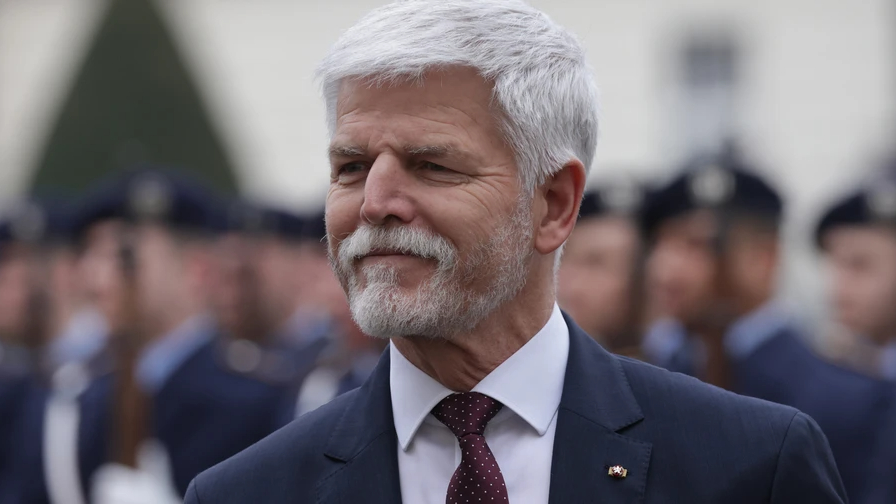
Czech President Pavel: Trump's Diesel Deal Derailed Peace Push
Czech President Petr Pavel believes that Donald Trump’s move to lift sanctions on Russian diesel cost Moscow a chance at a ceasefire that, in his view, was already close. He said so in an interview with the Axel Springer Global Reporters Network, which includes Politico, as cited by European Pravda.
Pavel said coordinated US and European sanctions on Russian oil, oligarchs and other industries had put Russia in a “difficult position”. But the deal Trump announced earlier this month, under which Russia would supply hundreds of thousands of tonnes of diesel fuel to the United States, gave the Kremlin “a chance to catch its breath”.
“It will be much harder now. Russia is using this momentum to get out from under pressure, and for it this is a kind of moral boost,” Pavel said. On Wednesday the White House said Trump had “successfully negotiated” the deal to supply the world market with “huge volumes of diesel fuel and lower prices”.
“A mistake”, not a betrayal
Pavel voiced support for Ukrainian President Volodymyr Zelensky, who has recently faced harsh criticism from Trump. “I believe that President Zelensky and all of Ukraine are the victims of this conflict. So I am probably the last person to blame Ukraine for being at fault. It was not Ukraine that attacked Russia. It was not Ukraine that threatened Russia,” he said.
He added that Trump shows a more open approach to Russia than any European leader. “To a certain extent he may be attracted by Vladimir Putin as an authoritative leader, but I don’t think President Trump looks at this as a struggle between democracies and autocracies, because he looks at it simply from the point of view of the economic prosperity of the United States,” Pavel said.
Although Pavel expressed concern about the diesel deal, he declined to say that the US had betrayed Ukraine or other European partners. “I don’t know yet whether it can be called a betrayal, but I would call it a mistake. Because it now gives Russia new hope: new hope that it can ignore Europe, ignore Ukraine, focus on striking a deal with the United States, potentially with China, and arrange everything according to its own priorities and strategies. I think this clearly runs against our interests in Europe,” he said.
Pavel also did not rule out that European countries could buy Russian oil in the future, but said it would “take time”. “If one day Russia becomes a country that respects the sovereignty and borders of other countries, then why not conduct normal business with such a country? But Russia has not reached that level yet,” he added.
Pushback in Washington
US congressman Gregory Meeks, a Democrat on the House Foreign Affairs Committee, has introduced a bipartisan bill meant to block the so-called US-Russia diesel deal. Earlier, a bipartisan group of 12 US senators wrote to Trump demanding that he cancel the recently concluded agreement with Putin allowing Russian-origin diesel onto world markets.