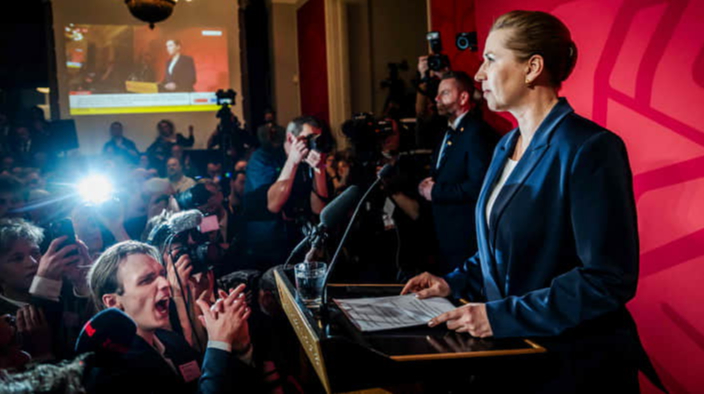
Danish PM Frederiksen Clings to Power Amid Historic Election Losses and a Fragmented Parliament
Danish Prime Minister Mette Frederiksen has emerged from the March 24 elections severely weakened, yet she remains a central figure in the race to form the country's next government. While her Social Democratic Party successfully retained its position as the largest political force in parliament, it garnered only 21.9% of the vote—its worst electoral performance since 1903.
The Collapse of the Centrist Experiment
The snap elections, called amidst an unprecedented diplomatic spat with Washington and threats from Donald Trump regarding Greenland, proved to be a harsh reality check for Frederiksen's centrist coalition. The ruling bloc, comprising the Social Democrats, Liberals (Venstre), and Moderates, suffered a devastating blow, losing 19 seats and dropping from 89 mandates to just 70.
With 90 seats required for a majority, neither the traditional left nor right blocs managed to secure absolute control. Consequently, Denmark is entering an era characterized by its most fragmented parliament in seven decades, with 12 different parties now vying to dictate political terms.
The "Greenland Gambit" Falls Short
Following disastrous municipal elections in November—where the Social Democrats lost control of Copenhagen for the first time in a century—and a subsequent drop in approval ratings to a record low of 17% in December, Frederiksen calculated that early elections could save her tenure. She hoped to capitalize on the "Greenland bump," rallying voters around her firm opposition to Trump's territorial ambitions.
However, while the Greenland issue captured international headlines, domestic concerns ultimately dominated the ballot box. Danish voters prioritized the escalating cost of living, immigration policies, and social justice over geopolitical disputes.
Winners, Losers, and the Kingmaker
The election results have clearly identified the new kingmaker in Danish politics: Lars Løkke Rasmussen. The leader of the Moderates and a two-time former prime minister now holds the "golden share." In a highly fractured parliament, no viable government can be formed without his cooperation.
- The Liberals (Venstre): The nation's oldest party recorded its worst result in its 156-year history, securing just 10.1%. Party leader and Defense Minister Troels Lund Poulsen barely managed to keep Venstre as the largest party in the "blue bloc," finishing just two seats ahead of the Liberal Alliance.
- Green Left: Capitalizing on dissatisfaction with Frederiksen's strict immigration policies, leader Pia Olsen Dyhr guided the party to a historic 11.6% (20 seats). Achieving its best result since 1987, the Green Left is now the second-largest force in parliament and is demanding a return to genuine left-wing governance.
- Danish People's Party: After nearly facing parliamentary elimination in 2022, Morten Messerschmidt's far-right nationalist party staged a massive comeback. Aligning with Viktor Orbán's "Patriots for Europe," the party tripled its seats with 9.1% of the vote.
- Liberal Alliance: Led by Alex Vanopslagh, the party ran an energetic campaign that resonated strongly with young urban voters, securing 9.4% of the vote.
Despite experiencing unprecedented losses across all 92 constituencies, Frederiksen remains determined to secure a third term as Prime Minister. However, in a deeply divided political landscape, the price for power will undoubtedly be dictated by her rivals.

We use cookies to improve your experience. Privacy Policy