Hungary's Media Battlefield: How Independent Journalism Threatens Orbán's Rule Ahead of April Elections
As Hungary approaches its crucial parliamentary elections on April 12, a seismic shift in the nation's political landscape appears increasingly possible. The ruling Fidesz party, led by Prime Minister Viktor Orbán, is facing a formidable challenge from the opposition Tisza party and its leader, Péter Magyar.
At the heart of Magyar's campaign is a bold promise: to dismantle the state's grip on information by suspending the license of the Media Services and Support Trust Fund (MTVA), the state organ responsible for funding and regulating public media.
The Architecture of a Media Monopoly
For over 15 years, Orbán's administration has systematically dismantled objective journalism. Through aggressive acquisitions, regulatory interference via bodies like the National Media and Infocommunications Authority, and immense political pressure, the government has transformed approximately 80% of Hungary's news outlets into state mouthpieces. Once-independent platforms like Origo and Index have been absorbed into this unprecedented European Union media capture.
The hostile takeover is starkly illustrated by the 2016 overnight shutdown of Népszabadság, formerly the country's leading daily newspaper, where decades of digital archives were wiped offline in a matter of days. The operation was orchestrated by Mediaworks, a conglomerate owned by Lőrinc Mészáros—a childhood friend of Orbán who built his fortune on state contracts and now dominates the nation's print and digital media markets.
Propaganda and Disinformation Campaigns
Recent analysis by the Budapest-based Republikon Institute highlights the severe imbalance in state broadcasting. Over a single week, evening news programs dedicated 15 hours of glowing coverage to Fidesz and its coalition partner, the KDNP. In stark contrast, Péter Magyar and the Tisza party were subjected to over five hours of explicitly negative and defamatory reporting.
To maintain its grip on power, the regime has deployed a series of targeted disinformation narratives:
- Geopolitical Fearmongering: State media portrays Orbán as the sole guarantor of peace, falsely claiming that Ukrainian President Volodymyr Zelensky and the European Commission are conspiring to install Magyar as a puppet leader.
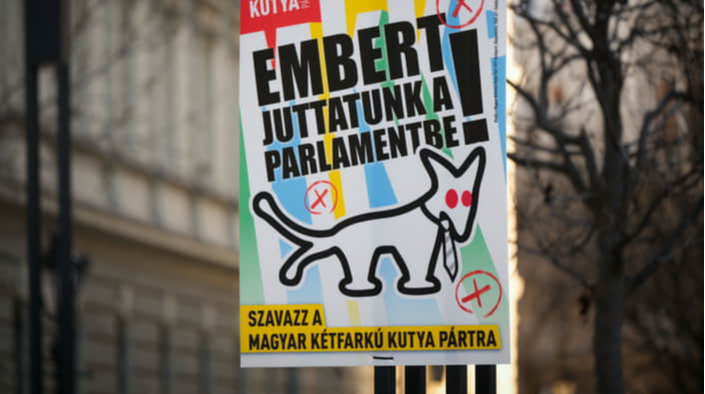
- Fabricated Domestic Scandals: Outlets like Index have published debunked claims, such as a supposed 33% tax hike by Tisza or a "pet tax" that would allegedly force pensioners to euthanize their dogs and cats. Though courts later ruled Tisza had no connection to these texts, the political damage was done.
- Weaponizing Incidents: The recent interception of two Ukrainian cash transit vehicles—conducting routine transfers from Austria's Raiffeisen Bank to Ukraine's Oschadbank—was instantly framed by pro-government media as evidence of "dirty money" funding the foreign-backed opposition.
The Resilience of Independent Journalism
The financial disparity in the media sector is staggering. Since 2015, the Hungarian government and state-owned enterprises have reportedly funneled over €1.1 billion in taxpayer money into advertising exclusively with Fidesz-aligned media. Yet, the regime's information monopoly is beginning to fracture.
A dedicated cadre of independent investigative outlets—including Direkt36, Telex, and 444.hu—has managed to pierce the government's propaganda shield. Relying almost entirely on reader support and journalistic tenacity, these platforms continue to expose high-level corruption and the regime's ties to the Kremlin.
By providing the public with fact-based reporting that state megaphones cannot drown out, independent media has paved the way for the Tisza party's rise. Ultimately, the independent journalism that Viktor Orbán spent years trying to eradicate may prove to be the very force that determines his political fate in April.

We use cookies to improve your experience. Privacy Policy