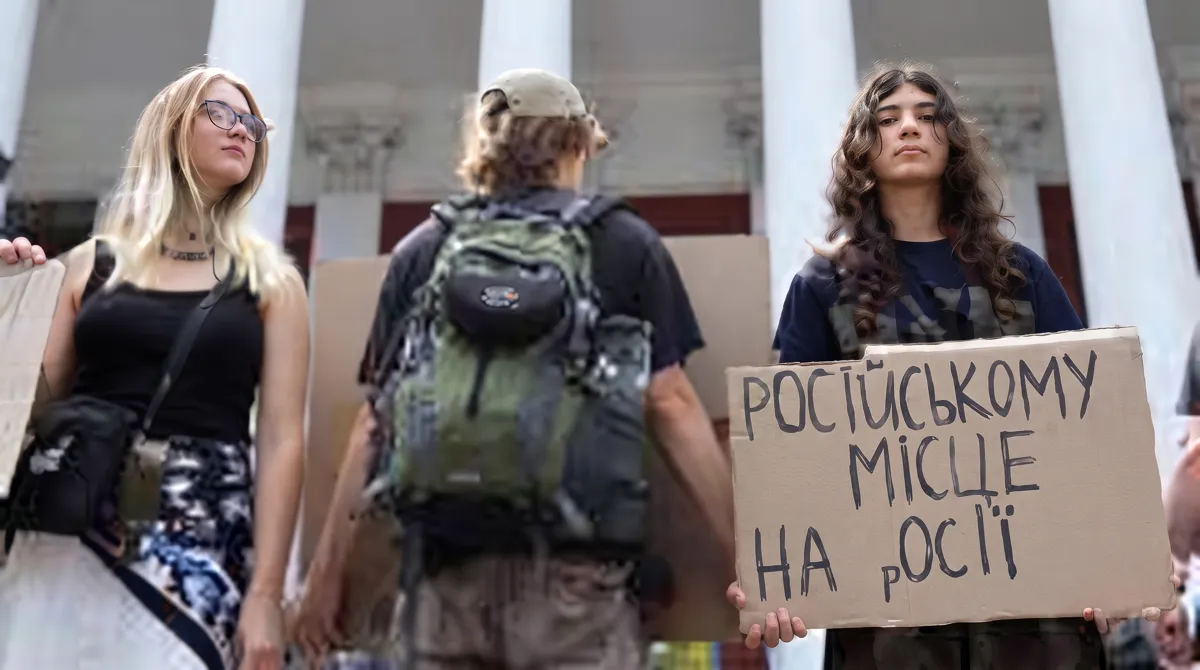
Odesa to vote on banning Russian language in arts and public spaces
The city council of Odesa, Ukraine's third-largest city on the Black Sea coast, will hold a vote this week on banning Russian-language content from music and literature in public spaces including streets, parks, public institutions and state-run entertainment venues. The proposal also recommends a ban in privately owned spaces.
What the proposal covers
The plan would eliminate Russian-language songs and books from public display across the city. All Russian-language books would be removed from prominent display in public libraries, and old Odesa songs well-known throughout the former Soviet Union would fall under the ban in public spaces.
The debate is particularly charged because Odesa is overwhelmingly Russian-speaking, even though Ukrainian is the only official state language. Many soldiers defending Ukraine on the front line also speak Russian as their native language.
Divided opinions
Supporters frame Russian as a tool of Moscow's influence over Ukrainian identity. Odesa lawyer Artem Kartashov, who has advised local authorities on a programme to decolonise the city of its Russian historical legacy, said: The Russian language is a weapon of Russia, and we need to try to fix that.
Critics warn the measure would only help Putin by deepening divisions within Ukrainian society. Comic actor Borys Barsky argued that a ban on Russian in Odesa would be counterproductive and play into Russia's hands.
Context
Odesa is targeted daily by Russian drone and missile strikes. The city is famous for its Russian-language literary and musical heritage, and this vote reflects a wider, ongoing reckoning in Ukraine about language, identity and the Soviet legacy.