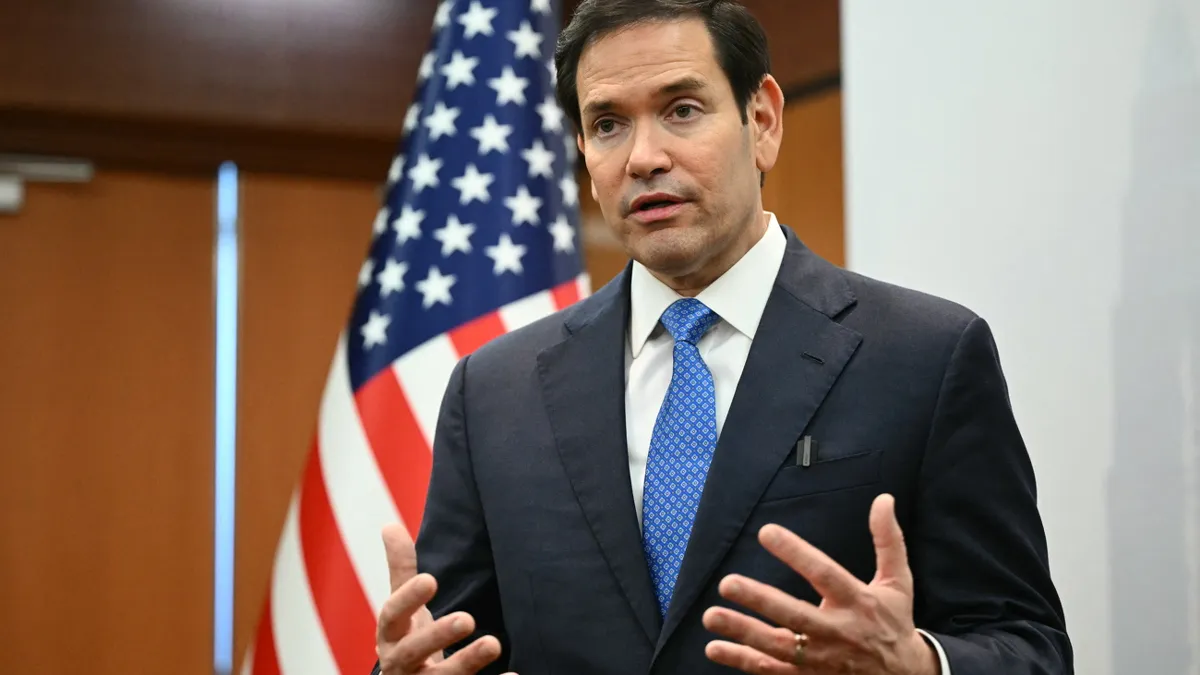
Rubio explains Trump's 60-day waiver of Russia sanctions
U.S. Secretary of State Marco Rubio said President Donald Trump signed an order waiving sanctions on Russia under the "Graham bill" so that, over 60 days, the administration can analyze how they could affect the American and global economies.
"Not only about Russia"
"The problem is that these sanctions were not only about Russia. They provide for tariffs on a number of countries, for example India and others. So I believe the president wants to use this 60-day period to analyze what introducing both sanctions and tariffs would mean for the global economy and even for the U.S. economy," Rubio said.
He added that the bill included exemptions because it was understood that time would be needed to study the issue amid current events, including pressure on global energy markets. Rubio repeated that energy prices are driven not only by the situation around Iran and the Strait of Hormuz, but also by Houthi attacks on Saudi Arabia and, allegedly, the Russia-Ukraine war, in which energy infrastructure is being hit.
Asked whether the decision was a "gift" to Vladimir Putin, Rubio said Russian diesel "would have been sold anyway"; the only difference is how much of it the United States would receive. He cited India, which has voluntarily diversified supply but still buys a large share of its energy from Russia. See more in Politics.