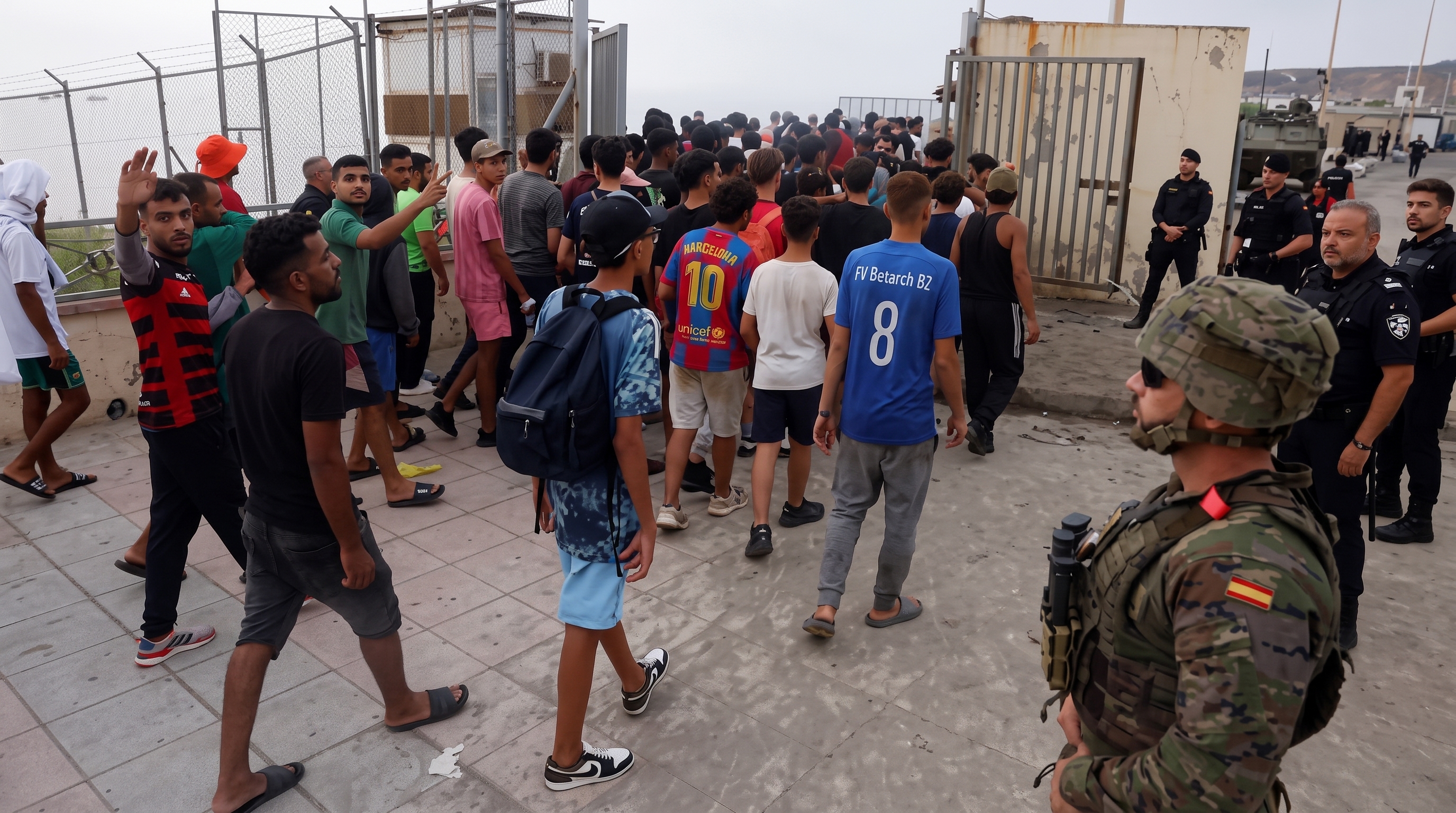
Tens of Thousands of Migrants Return from Spain's Ceuta as EU Debates Border Policy
The surge of migrants into Spain's North African exclave of Ceuta has largely subsided, with Spanish Foreign Minister José Manuel Albares declaring that nearly all of the more than 50,000 people who entered irregularly have returned to Morocco. The mass crossing was one of the largest ever recorded at any European border.
At least 67 people died attempting to reach Ceuta by sea. Authorities said many who made it to the exclave had already decided to leave voluntarily, facing a lack of accommodation, food supplies, and any realistic prospect of continuing their journey to mainland Spain.
Eyewitness Accounts Challenge Official Version
Deutsche Welle reporter Philipp Scholz, who was on the ground in Ceuta, reported that not all departures were voluntary. He described security forces driving people toward the border from beaches and overcrowded reception centers. Clashes between police, military personnel, and migrants also continued Saturday.
Attempts to enter Spain's other North African exclave, Melilla, also continued Friday. Moroccan state broadcaster RTVE reported confrontations at the border, with migrants throwing stones as security forces responded with tear gas. It was unclear whether any migrants reached Melilla.
EU and Schengen Crisis
The Ceuta crisis has triggered a broader debate across Europe on border management. Italy announced it was temporarily suspending the Schengen free-movement arrangement with Spain, citing the scale of the irregular crossings. Italian Prime Minister Giorgia Meloni called the scenes in Ceuta "shocking."
Spanish Prime Minister Pedro Sánchez pushed back against critics in the EU, calling for solidarity and warning against divisions. "Solidarity and compassion are voluntary — respect for European treaties is not," he wrote on social media. The EU is expected to hold emergency talks on migration and external border protection measures.

We use cookies to improve your experience. Privacy Policy