Trump: US-Iran Ceasefire Is Over as Both Sides Trade Strikes
President Donald Trump declared the United States-Iran ceasefire "over" on Wednesday, July 8, as both countries exchanged a fresh round of military strikes, raising fears that the four-month-old conflict could spiral out of control once more.
What Triggered the Latest Escalation
Iran's Islamic Revolutionary Guard Corps (IRGC) struck three commercial tankers transiting the Strait of Hormuz — a critical passage through which roughly a fifth of the world's oil and gas supply flows. Washington responded by launching a series of strikes on over 80 Iranian targets, including coastal air defense systems, radar installations, command-and-control networks, and small IRGC patrol boats in the Persian Gulf.
Iran immediately retaliated. The IRGC said it had "destroyed 85 major US military installations" in Bahrain and Kuwait, including the United States Fifth Naval Fleet base in Bahrain and Ali Salem Air Base in Kuwait. Iran also claimed to have shot down a US MQ-9 drone that it said was interfering with the operation. Kuwait, Qatar, and Saudi Arabia all condemned Iran for harassing shipping in the Strait.
Trump at NATO: "As Far as I'm Concerned, It's Over"
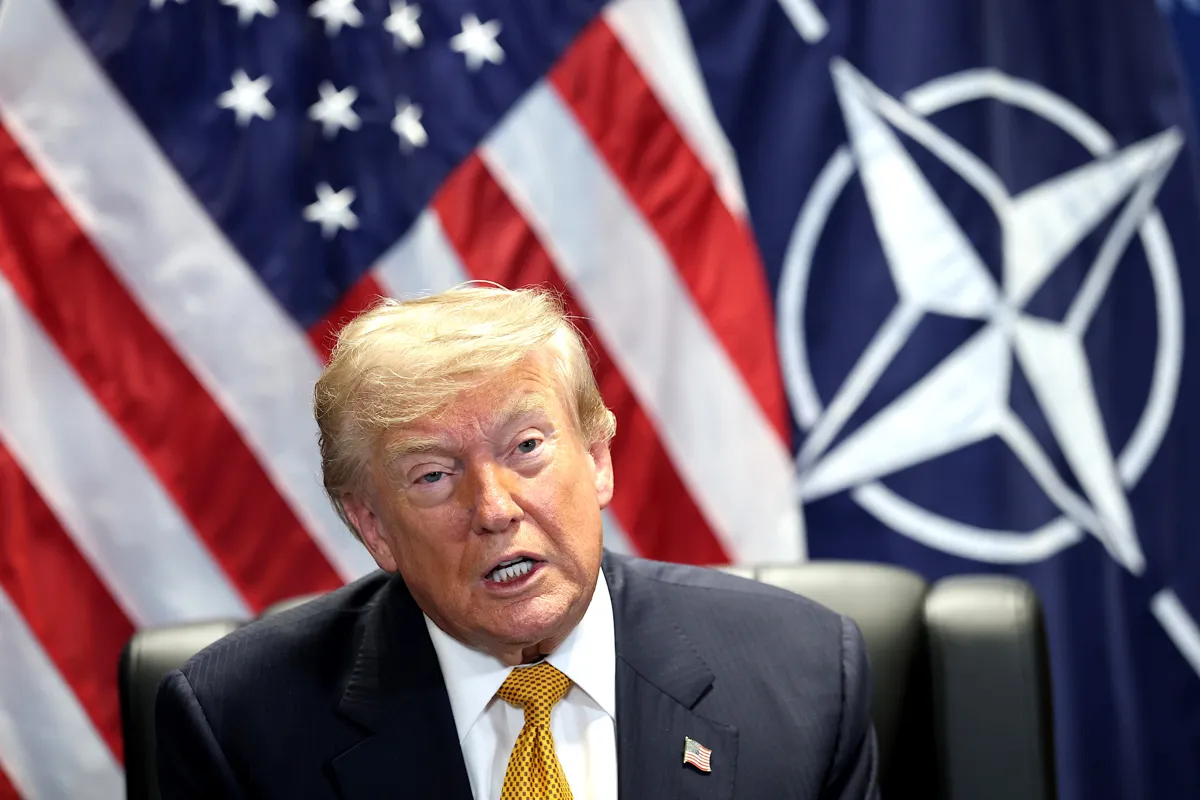
Speaking on the sidelines of the NATO summit in Ankara, Turkey, Trump told reporters the ceasefire agreed to in mid-June had run its course. "For me, I think it's over. As far as I'm concerned, it's just a waste of time," he said, while threatening additional strikes on Iran "very hard" again later in the evening. He also warned of possible attacks on Iranian civilian infrastructure if the country's behavior did not change.
NATO Secretary General Mark Rutte backed the US position, calling Washington's strikes "absolutely necessary" given Iran's "violation" of the ceasefire agreement. Iran's Foreign Minister Abbas Araghchi, however, described the US actions as a "flagrant violation" of the memorandum of understanding and threatened to halt ongoing peace talks.
Diplomatic Signals Amid the Fire
Despite the heated rhetoric, analysts noted that the US chose to strike Qeshm Island, Bandar Abbas, and Sirik — strategic coastal targets — rather than Tehran or Iran's nuclear development sites, signaling a desire to keep the exchange limited if Iran allows commercial traffic through the Strait to resume.
"The danger is that the US and Iran will remain stuck in an endless cycle of retaliations that will render the Strait largely impassable for the foreseeable future," one security analyst warned. The conflict, which began with US and Israeli strikes on Iran on February 28, is now entering its fourth month.
- Britain, France, and Germany pledged more than $50 billion in long-range weapons at the NATO summit
- Trump also criticized allies for refusing to cede Greenland to the US and for not supporting Operation Epic Fury against Iran
- The US Treasury reinstated sanctions on Iranian oil sales, which had been waived for 60 days under the ceasefire terms
What Happens Next
The Strait of Hormuz remains partially disrupted, with shipping volumes far below pre-war levels. The International Monetary Fund, which released its updated global economic outlook on the same day, said its growth forecasts assumed the Strait would reopen later this month — an assumption that now looks increasingly uncertain. The world is watching Ankara and Tehran closely as both sides decide whether to step back or escalate further.