Venezuela Quake Death Toll Rises to 1,450 as Survivors Including Boys Pulled From Rubble
The death toll from Venezuela's devastating twin earthquakes has climbed to at least 1,450, with rescue teams reporting isolated but emotionally charged saves over the weekend, even as the critical 72-hour survival window has now closed. National Assembly President Jorge Rodriguez announced the updated death toll on Sunday, adding that at least 3,150 people were injured and nearly 50,000 reported missing after back-to-back 7.2 and 7.5 magnitude quakes struck near the coastal area of La Guaira on June 24.
Boys and Elderly Woman Pulled from Ruins
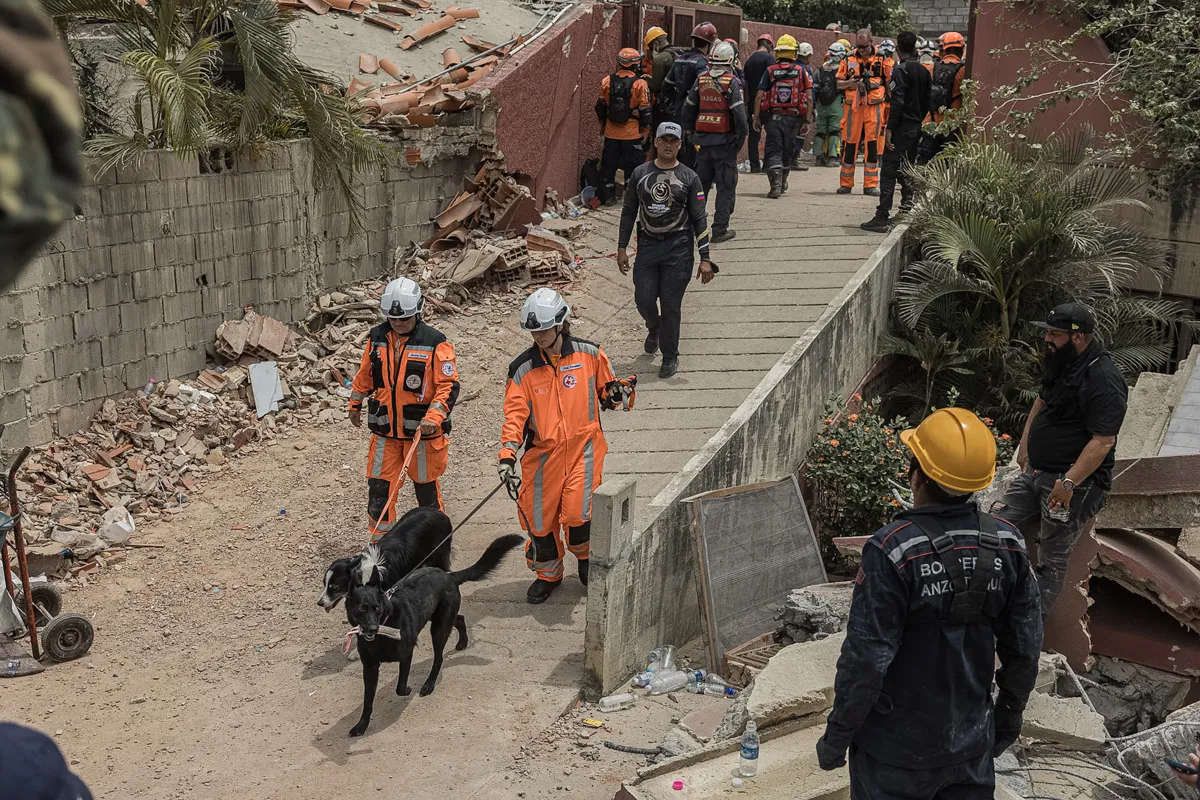
Despite the fading odds, rescuers pulled a string of survivors from the debris on Sunday. British Columbia-based search teams and international units worked for six hours to reach one boy trapped under collapsed masonry, carefully digging by hand while residents watched anxiously. Colombian and Mexican rescue teams each separately freed an 11-year-old boy from separate collapsed structures in different parts of the disaster zone.
Perhaps the most celebrated rescue of the weekend involved a 60-year-old woman found alive in the coastal area of Carabayida — 86 hours after the initial quake. El Salvador's President Nayib Bukele said teams from his country and Peru worked through the night to extract her. "This achievement was made possible thanks to the effort and perseverance of our rescuers, who worked tirelessly throughout the night," Bukele wrote on social media. The woman was transported to a Caracas hospital, where her condition remained described as "delicate".
Scale of the Disaster
Rodriguez confirmed that 774 buildings had collapsed and 12,721 people were displaced. Around 30,000 Venezuelan rescue workers and 2,700 foreign experts from dozens of countries have been searching the rubble. Interim President Delcy Rodriguez, who took office after President Nicolas Maduro was detained by the United States in January, declared that operations would not be suspended despite the elapsed rescue window. "Today we have recovered people alive and, therefore, operations are not being suspended. We always maintain hope," she said.
Access to La Guaira state remains tightly restricted, with over 14,000 military and police deployed and special permits required to enter. Criticism has mounted over the government response: in one incident, residents blocked a state excavator from leaving a collapse site after workers took photos in front of flattened buildings and then left without assisting.
International Aid Pours In
The United States has sent specialist rescue teams and pledged $150 million in humanitarian support. The European Union mobilised five million euros in emergency assistance and deployed its Copernicus satellite system to map the damage. Schools across affected areas will remain closed for another week, and electricity supply has been restored to 75 percent of normal capacity.
Al Jazeera correspondent Teresa Bo, reporting from Catia La Mar in La Guaira, described families who had marked collapsed homes where bodies of their loved ones could not yet be recovered. "What's happening here is a major test for the international community," she said. "The relatives are waiting outside for their bodies to be retrieved."