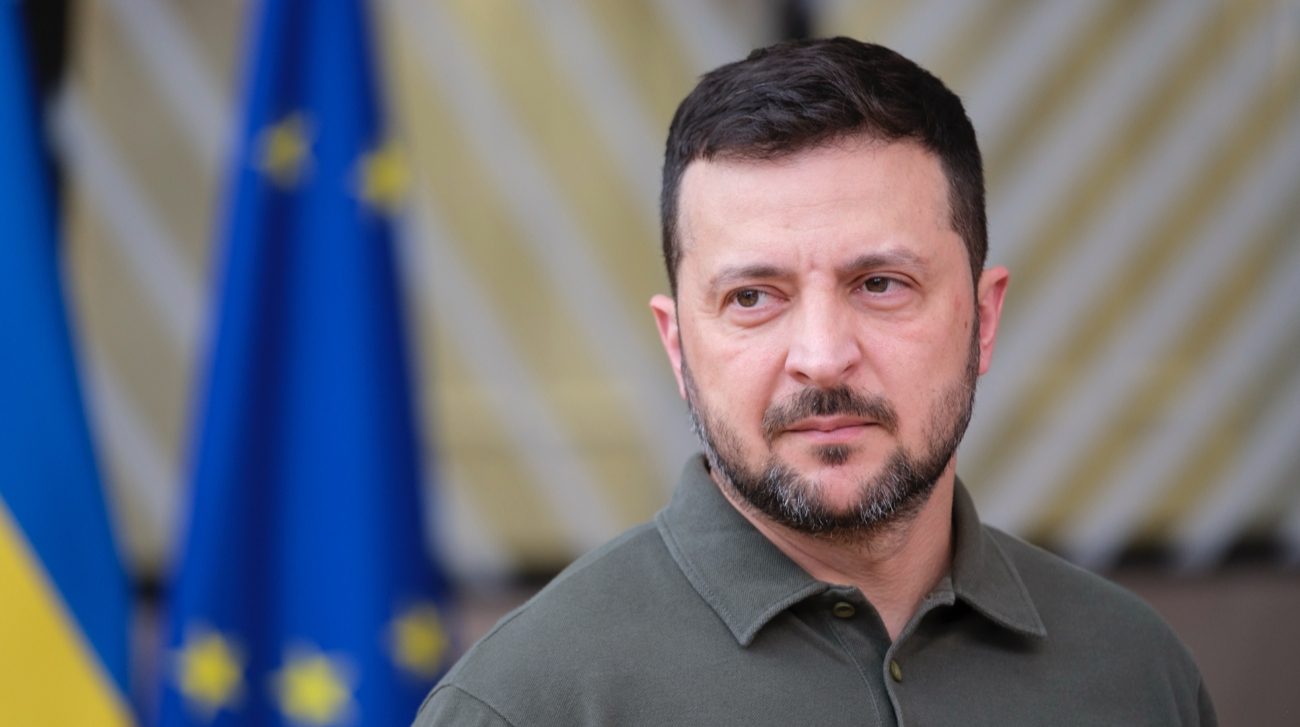
Zelenskyy Criticizes Netanyahu's Diplomatic Balancing Act Amid Russia-Iran Collusion
Ukrainian President Volodymyr Zelenskyy has publicly criticized Israeli Prime Minister Benjamin Netanyahu for attempting to maintain a diplomatic middle ground between Kyiv and Moscow, despite Russia's increasing military support for Iran.
In a recent interview with Axios, Zelenskyy highlighted the paradox of Israel's neutrality. “My feeling is that Netanyahu always wants to balance between Russia and Ukraine, even when the Russian Federation is helping Iran,” Zelenskyy stated, while acknowledging that as a national leader, Netanyahu ultimately dictates his own country's policy.
A Two-Year Diplomatic Silence
The Ukrainian leader revealed that he has not spoken directly with Netanyahu in two years. Following the outbreak of war in Iran, Zelenskyy noted that while other nations reached out to Ukraine for assistance, Israel notably did not.
“Israel itself must decide whether it wants to cooperate with Ukraine,” Zelenskyy remarked. He pointed out a clear opportunity for mutual benefit: “We have what he needs, and he has what we need... we have a huge deficit of air defense. But we have things that Israel doesn't have, and we are ready for this dialogue.”
Russian Intelligence Sharing with Iran
Underscoring the threat posed by the Moscow-Tehran alliance, Zelenskyy disclosed that Ukraine has provided its international partners with concrete evidence of Russian intelligence transfers to Iran. According to the Ukrainian President, Moscow supplied Tehran with sensitive satellite imagery of United States and European military bases located in Saudi Arabia, Qatar, Jordan, and the United Arab Emirates.
Furthermore, Russian forces have reportedly shared operational combat experience gained in Ukraine with Iranian forces, particularly focusing on the tactical deployment of FPV (First-Person View) drones.
Shifting Alliances in the Middle East
Zelenskyy noted that Middle Eastern leaders hold divided perspectives on the trajectory of the ongoing war, with some anticipating a prolonged conflict and others advocating for a swift resolution. In response to these dynamics, Kyiv is actively forging new security partnerships in the region.
On March 28, the General Staffs of Ukraine and Qatar signed a mutually beneficial defense partnership agreement slated to last at least 10 years. Zelenskyy announced that similar defense pacts are expected to be finalized soon with Saudi Arabia and the UAE. He explicitly clarified, however, that these agreements will not involve the deployment of Ukrainian military personnel to foreign conflicts.
Since the onset of Russia's full-scale invasion in 2022, Israel has officially condemned the aggression but has strictly limited its support for Ukraine to humanitarian aid, consistently declining requests to provide lethal weaponry.

We use cookies to improve your experience. Privacy Policy