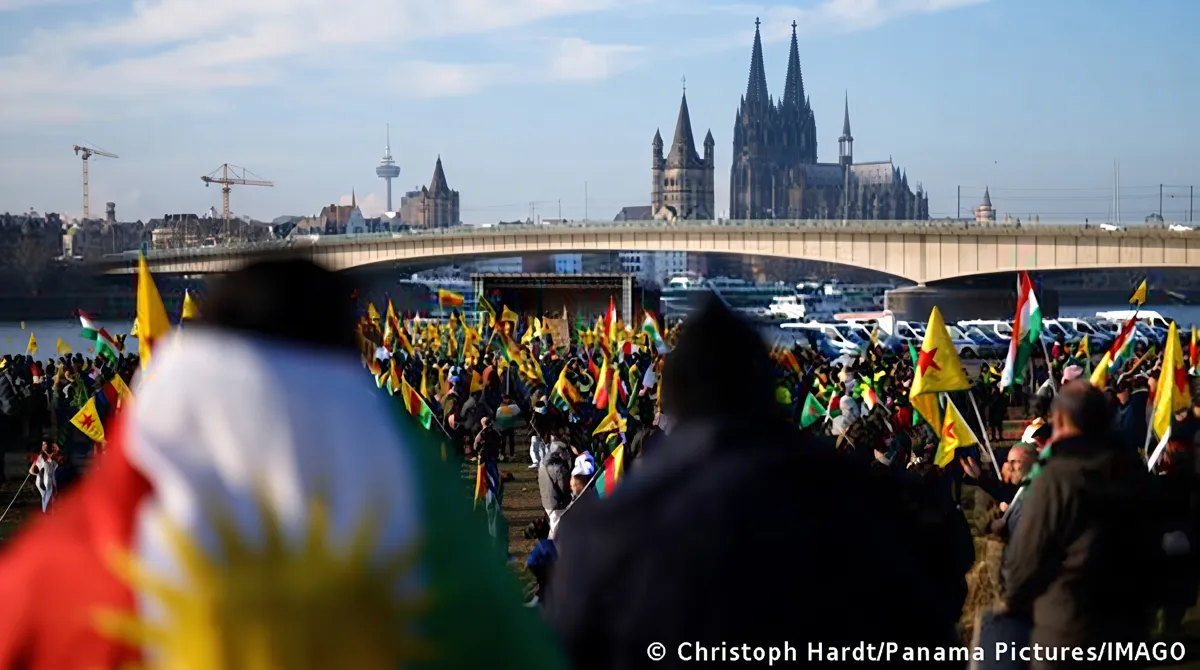
Arrived in Germany, rooted back home: Kurds caught between two worlds
Kurds represent one of the largest immigrant communities in Germany, numbering in the hundreds of thousands, yet public awareness of their culture, history and daily lives remains surprisingly limited. A key reason, analysts say, is that Kurds lack their own state — their population is spread across Turkey, Iraq, Syria and Iran — making them difficult to categorize within conventional frameworks of national identity.
For Kurdish families living in Germany, life often involves navigating between two distinct worlds: the country where they have built their livelihoods, and the homeland they have never fully left behind. Language, cultural traditions, and political affiliations from the region of origin all play a role in shaping their community life in Germany.
Identity without borders
The absence of a Kurdish state also means that there is no single official language or cultural institution to anchor a collective identity. Kurdish communities in Germany come from different countries and sometimes speak mutually unintelligible dialects, further complicating the picture.
Despite these complexities, Kurdish cultural associations, political organizations and media have flourished in Germany over decades. Many Kurds in Germany remain deeply engaged with political developments in their regions of origin, particularly in relation to ongoing conflicts in Iraq and Syria.