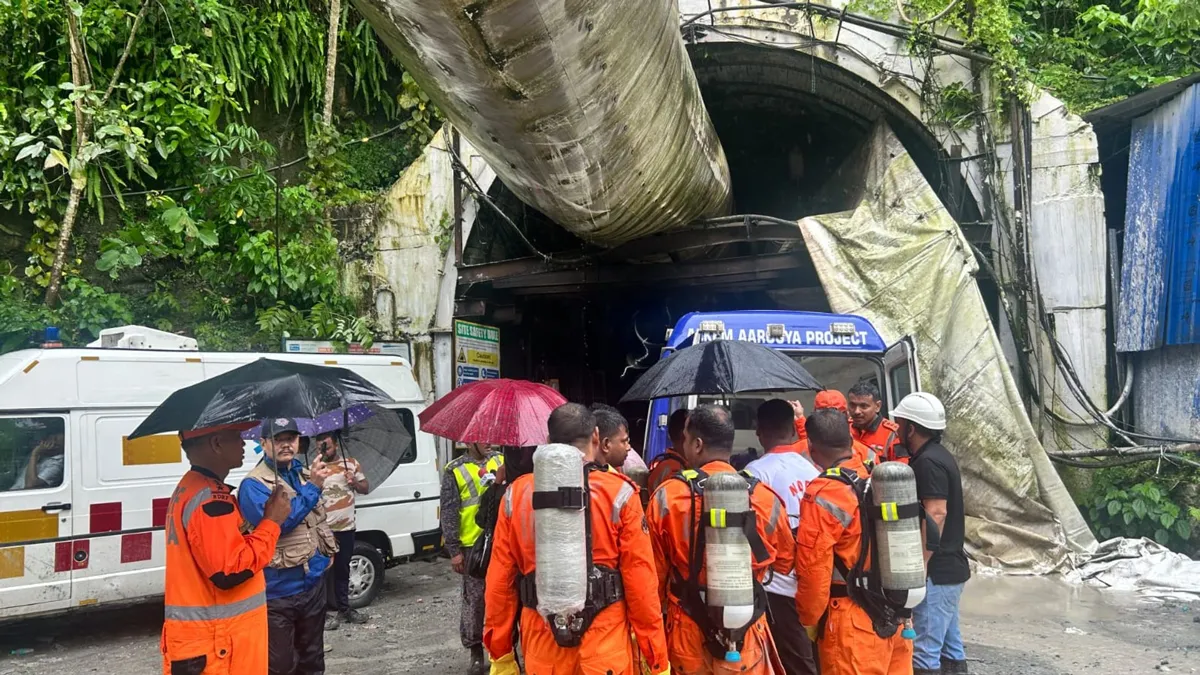
At Least 10 Dead in India Tunnel Collapse at Hydropower Site, 17 Still Trapped
A deadly tunnel collapse struck a hydropower construction project in Samardung, India, on Tuesday, leaving at least 10 workers dead and 17 others feared trapped below the surface. The disaster marks the latest in a series of infrastructure accidents at large construction projects in mountainous regions of India.
Rescue Operation Underway
Emergency teams were mobilized within hours of the collapse, with rescue workers carrying oxygen cylinders descending to the affected area in an attempt to reach those still unaccounted for. The difficult terrain and unstable tunnel conditions complicated efforts, forcing crews to proceed with extreme caution.
Authorities confirmed 10 deaths as of Tuesday, but that number was expected to rise as rescuers worked through the rubble. Seventeen workers are still missing and presumed trapped in a section of the tunnel that was sealed off by the collapse.
Hydropower Development and Safety Concerns
India has been aggressively expanding its hydropower capacity in the Himalayan foothills and mountain regions, where rivers offer enormous untapped energy potential. However, these regions are also geologically unstable and prone to landslides, flash floods, and ground subsidence — factors that have contributed to a string of construction tragedies in recent years.
Experts and labour unions have long raised concerns about safety standards at remote construction sites, particularly those involving underground tunnelling in geologically active zones. The Samardung disaster is expected to reignite calls for stricter oversight of construction practices in India's ambitious infrastructure expansion programme.