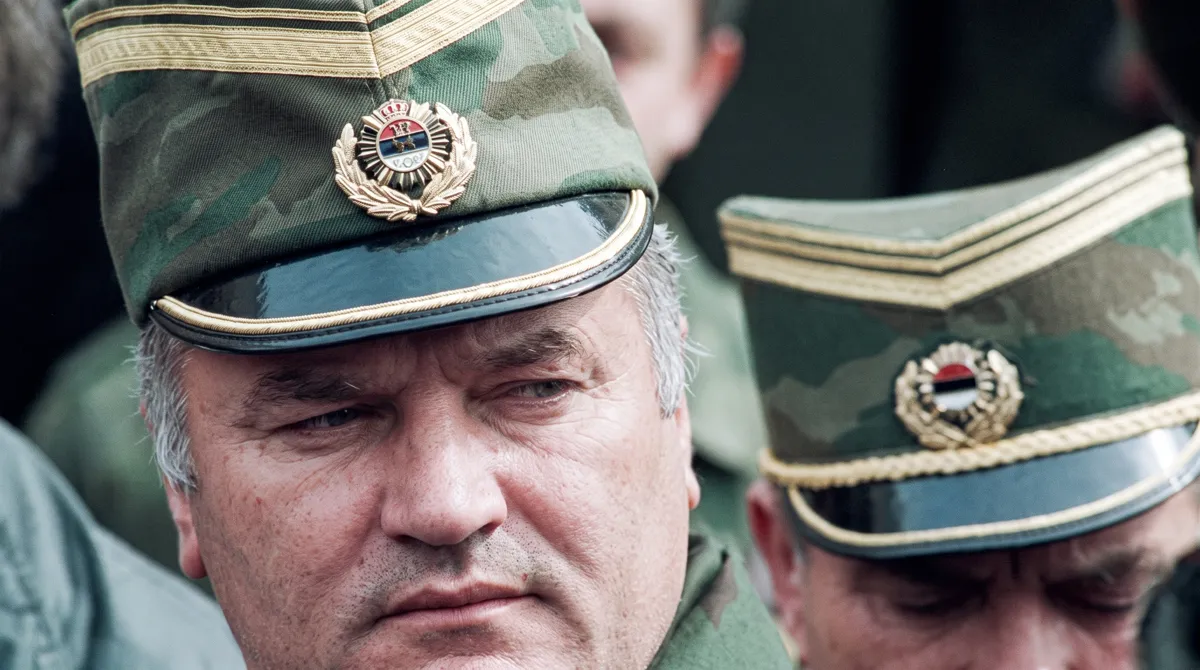
BBC correspondent recalls meeting dangerously fanatical Mladic in early Bosnian war
BBC special correspondent Allan Little was there from the very beginning of the Bosnian war in 1992 -- watching fires of ethnic cleansing light the night sky and walking alongside convoys of refugees. On the day of Ratko Mladic's death, he recalls his personal encounter with the man who would become one of history's most notorious war criminals.
A first meeting in Sarajevo
Little met Mladic at Lukavica barracks on the southern edge of Sarajevo in the first summer of the war. The barracks was awash with weapons -- Kalashnikovs sold for $200, hand grenades for one dollar. Mladic had just returned from the front line, pumped up by the proximity of the fighting. He gripped Little's hand, pulled him close, and spoke of his dream of a world without guns and war -- even as forces under his command were burning villages across the valley.
"He struck me then as fanatical, dangerously so," Little writes. In the years that followed, Mladic's forces committed what the UN tribunal later determined to be genocide at Srebrenica in 1995, murdering more than 8,000 Bosniak men and boys. They also conducted a years-long siege of Sarajevo and carried out mass rape and forced expulsions across Bosnia.
A war reduced to labels
Little reflects on the tendency to reduce people to ethnic labels when the victims were above all musicians, doctors, farmers and parents. He recalls an 80-year-old man separated from his wife in the chaos of flight who, asked his ethnicity, replied: "I am a musician." Mladic died in prison at The Hague aged 84, leaving a legacy defined by mass graves and the darkest chapter in Europe since the Second World War.