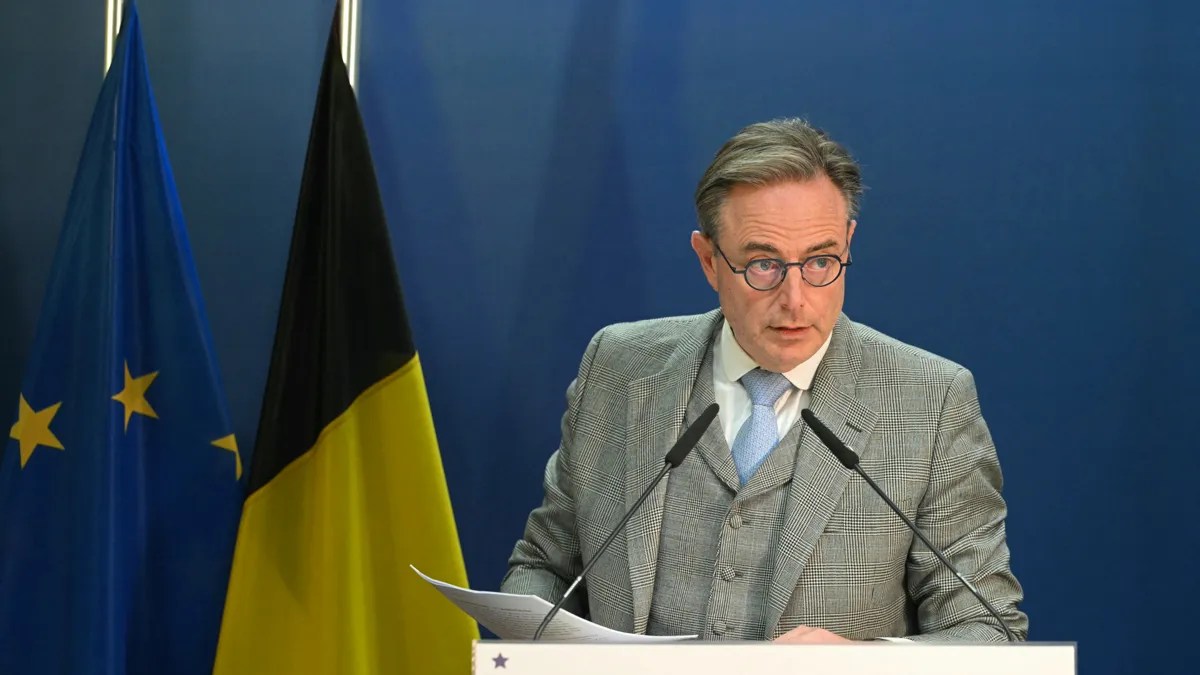
Belgium's De Wever: Commission won't reopen frozen Russian assets debate
Belgian Prime Minister Bart De Wever said he is convinced the European Commission will not reopen the debate on using frozen Russian assets held at the Euroclear depository to cover Ukraine's financial needs, The Brussels Times reported.
De Wever made the remarks on Wednesday in the Belgian parliament at a session of the Federal Advisory Committee on European Affairs, reporting on the results of the recent EU leaders' summit. He said he expects the Commission not to propose new financial operations with Russian funds to meet Ukraine's needs, and that he has assurances to that effect.
"I am sure of it, because that is exactly what was said," De Wever told lawmakers.
Warning to EU colleagues
The prime minister noted that he cannot fully rule out attempts by individual states to put the issue back on the agenda. He criticised Dutch Prime Minister Rob Jetten, who said publicly on the radio that he intends to "take this money".
De Wever said some of the new EU leaders did not take part in last year's discussions and are now trying to push arguments that he managed to stop at an early stage. He warned colleagues that "even such rhetoric" could have legal consequences, and in his view the warning worked.
"One colleague told me in the corridor that it looked as if I had gone through these debates with a flamethrower," De Wever said, adding that the enthusiasm for developing the topic at the negotiating table is gone.
Background
In 2022, after Russia's full-scale invasion, Western allies blocked about 185 billion euros of Russian central bank sovereign assets held at Euroclear in Brussels. In December 2025 EU leaders dropped confiscation of the funds or a direct reparations loan secured on them because of Belgium's firm stance, and instead approved a 90 billion euro loan to Ukraine for 2026–2027, meant to cover about two thirds of its needs.
On 16 October 2026, speaking at the EU summit, President Volodymyr Zelensky called on leaders to provide an additional 70 billion euros of support for 2027 because of rising defence costs. A number of countries, including Germany, Sweden and Finland, raised the question of tapping the frozen assets again, but De Wever has said publicly that the money should remain untouched until a final peace treaty is signed.
More in Business.