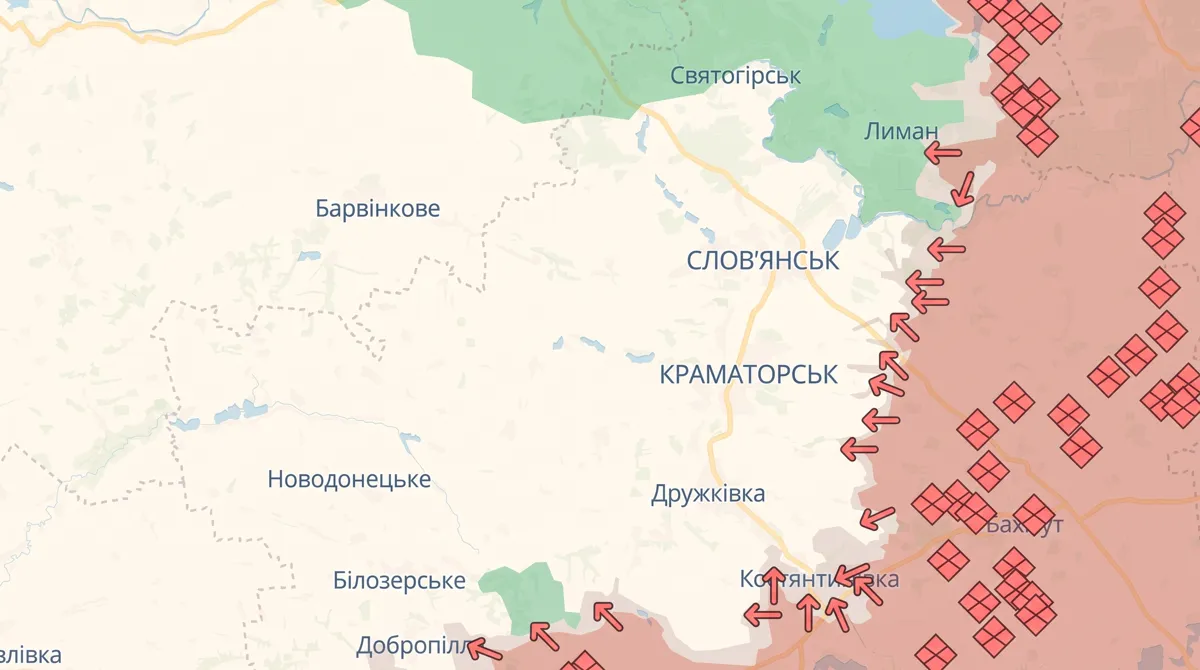
Biletskyi: Vivaldi Operation Foiled Russia's Plan to Bypass Donetsk Oblast
Andriy Biletskyi, commander of Ukraine's Third Army Corps, said on Monday, Oct. 19, that Operation Vivaldi on the Lyman axis disrupted Russian attempts to bypass Donetsk Oblast via Dobropillia and Barvinkove. He spoke to journalists.
According to Biletskyi, Russia has now dropped those plans, and the 144th Division of its 20th Army has been routed and has effectively ceased to exist as an organised force.
The Russian plan, as Biletskyi describes it
He said the task of the Russian "West" group, which includes three armies (the 1st Tank, 20th and 25th combined-arms armies), was to move from a bridgehead on the Chornyi Zherebets river and through a salient that Ukrainian troops later eliminated, towards Sviatohirsk and Rubtsi. That would have split the Ukrainian force on the eastern bank of the Oskil river in two, destroyed it and opened the way to Barvinkove in the south of Kharkiv Oblast.
In his words, one thrust through Sviatohirsk and the salient, bypassing Lyman, would have enveloped the Sloviansk-Kramatorsk agglomeration from the north, while a second through Dobropillia to the same Barvinkove would have completed the encirclement of Donetsk Oblast. He called it Russia's plan for 2026, begun in 2025, with Barvinkove to be reached by the end of 2026.
What remains for Russia
Biletskyi said that after the offensive group was defeated, the Russians are left with two options in Donetsk Oblast: a frontal assault on Sloviansk and Kramatorsk, which he described as costly, bloody and with no guarantee of success, or something else. They have temporarily dropped that idea as well. In practice only one axis of effort remains, Dobropillia, where Russia had some success and has not given up the "pincers"; he said senior Ukrainian command is actively counterattacking there.
The Third Corps reached the Chornyi Zherebets river, which shortened the front line and let it pack its infantry positions more densely. Ukrainian forces now defend along a convenient natural line that Russian troops would have to cross again if they resumed the offensive.
Why it is called Vivaldi
In a separate account, Biletskyi explained the name. It was suggested by two corps assault officers, known by the call signs "Yurist" and "Lieshyi", because the original plan had four stages, one for each season. The plan later changed and the number of stages grew beyond four. Classical music, he said, is usually heard in the corridors of the corps headquarters.
Lieshyi, who had been wounded seven times in assaults before moving to staff work, was recently killed. Yurist, a native of Mariupol who joined the Third Assault Brigade very young, is seriously wounded and has been in hospital for a long time.
As we reported, the operation has been in the news for weeks: Ukraine said it liberated up to 140 square kilometres in its course. More on the war is in our World section.