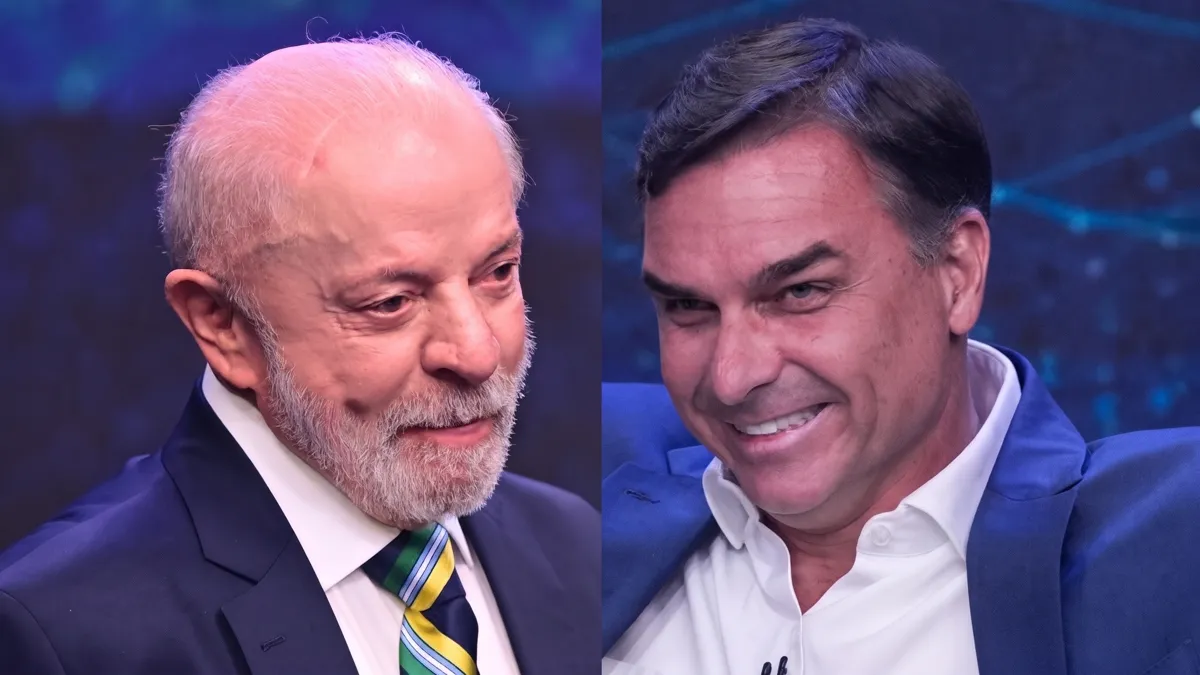
Brazil Runoff: Lula and Flávio Bolsonaro Neck and Neck
Brazil, the tenth-largest industrial nation, goes to the polls again on Sunday, October 25, in a runoff between longtime president Luiz Inácio Lula da Silva of the Workers' Party (PT) and the right-wing populist senator Flávio Bolsonaro (PL), son of former president Jair Bolsonaro, DW reports.
Polls suggest an extremely close result. Both candidates are regularly level within the statistical margin of error, which makes the outcome hard to predict.
What the polls say
In a poll published on Saturday by the Datafolha institute, Flávio had 51% of valid votes against 49% for Lula. With a margin of error of two percentage points, this is considered a statistical tie. A Nexus poll published the same day put Flávio at 50.5% and Lula at 49.5%, again within the 2.2-point margin of error.
In the first round on October 4, Flávio won 47.03% of the vote and Lula 45.16%, a gap of only 1.87 percentage points.
Two opposing projects
Lula is again relying on the memory of social policies introduced during his earlier governments (2003 to 2011), supplemented by appeals to defend national sovereignty. Flávio is betting on revenge, seeking to return his political dynasty to power after the defeat of 2022. Like his father, he builds on rejection of the PT among parts of Brazilian society, takes a confrontational line toward institutions such as the Supreme Federal Court (STF) and picks up themes such as rising living costs.
Both campaigns were overshadowed by an ethical and institutional crisis in the judiciary, a flare-up of corruption scandals, geopolitical tensions and even allegations of foreign interference, both by the US government and by large US technology companies.
What is at stake
The result will also influence Brazil's role in the world. A Lula victory would be met with relief in Europe and among advocates of multilateralism and environmental causes. A win for Flávio Bolsonaro would worry not only environmentalists but would probably align Brazil more closely with the United States under Donald Trump, following a trend already seen in Argentina under Javier Milei and in Colombia under Abelardo de la Espriella.
Lula, nearing his 81st birthday, may be on the ballot for the last time. Although he led the polls at first, the first round was harder than expected for him: compared with the first round of 2022, he lost about 3.4 million votes. His campaign responded with a broad mobilisation of supporters and a stronger digital presence.
Flávio, aged 45, enters the runoff as the favourite, carried by a right-wing wave that swept the National Congress in the first round. He promised to see "justice done" for his father Jair Bolsonaro, who was convicted of attempting a coup and imprisoned, and spoke repeatedly in favour of an amnesty for all those involved in the attacks of January 8, 2023. His campaign focused on rising living costs, corruption and drugs, and he promised a "war" on what he called "narco-terrorism".
In the last debate on the TV network Globo, Flávio said: "Lula promised beefsteaks and delivered pumpkin." Lula summed up what is at stake in his view: "Either we keep democracy alive, or we will have a militiaman governing this country. That is good for no one. Don't try this experiment."
Polls show that the electorates of both candidates are largely settled: 94% of Flávio's supporters say they will not change their choice. Lula's biggest challenge is therefore to win over the small group of undecided voters and mobilise those who did not vote in the first round. If elected, Flávio would have stronger political backing than his father in 2018, as he could count on a record number of newly elected PL deputies and senators.
More in our politics section.