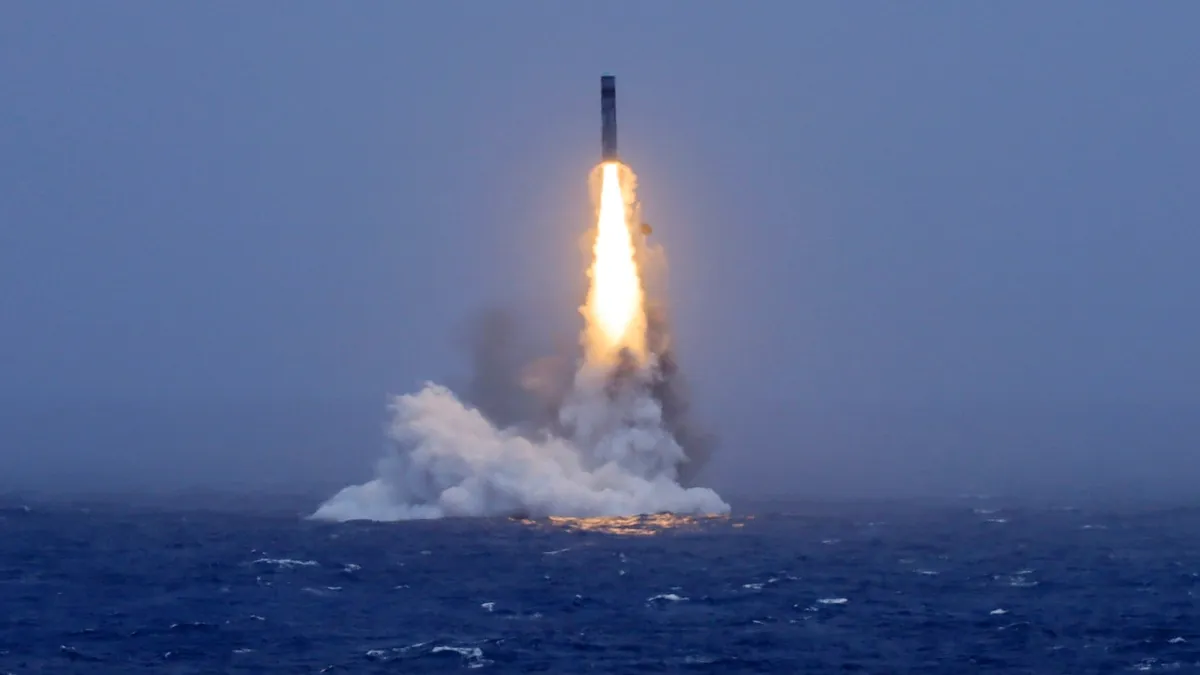
China Fires Ballistic Missile Into South Pacific in Signal to the US
China launched a nuclear-capable ballistic missile from a nuclear-powered submarine into the South Pacific Ocean on Monday, July 6, in a rare weapons demonstration that drew sharp international condemnation from countries across the region.
Beijing said the launch was part of annual military exercises. Analysts, however, say the target audience for the test was clear: the United States.
What the Test Demonstrated
"The most important message is the PLA is becoming a powerful military with a very strong strategic nuclear capability," said Tong Zhao, a senior fellow at the Carnegie Endowment for International Peace.
The launch was a public demonstration of China's sea-based nuclear strike capability — the naval leg of what is known as the nuclear triad (land, sea, and air-based nuclear systems). Experts say it showed China possesses what is called a second-strike capability, meaning that even if it were attacked first, it could still retaliate, because submarine-based launchers can be positioned anywhere in the ocean.
Taiwan's National Security Council identified the missile as a JL-2, an older submarine-launched ballistic missile. Chinese state media experts suggested it may have been a newer JL-3, with a longer range capable of striking targets on the east side of the Pacific from the west side.
Regional Outcry
The missile landed in the South Pacific Nuclear Free Zone, an area covered by the 1986 Treaty of Rarotonga, which prohibits nuclear weapons throughout the region. China ratified the relevant protocols in 1987.
Australia and New Zealand said they had not received adequate advance notice of the test. Australian Prime Minister Anthony Albanese, speaking during a visit to the Solomon Islands, described the launch as "a provocative act by China which does destabilize the region."
Solomon Islands Prime Minister Matthew Wale said: "China is a good friend of Solomon Islands, but this is not something a friend does."
Beijing defended its actions, saying it had given countries in the area appropriate advance notice and that the test demonstrated "the openness and transparency of the Chinese military."
China's Nuclear Buildup
The test comes as China continues to expand its nuclear-powered submarine fleet. According to the International Institute for Strategic Studies, China has been building such submarines faster than the United States over the past five years.
Experts say the test should be seen as a systematic move, not an isolated event. "If China wants to become a major military power, it should be put under the same standards" as the US, UK, and France, said one nuclear policy expert.
The launch is particularly significant given the broader context of global security tensions, including the ongoing US-Iran conflict and heightened competition in the Indo-Pacific region.