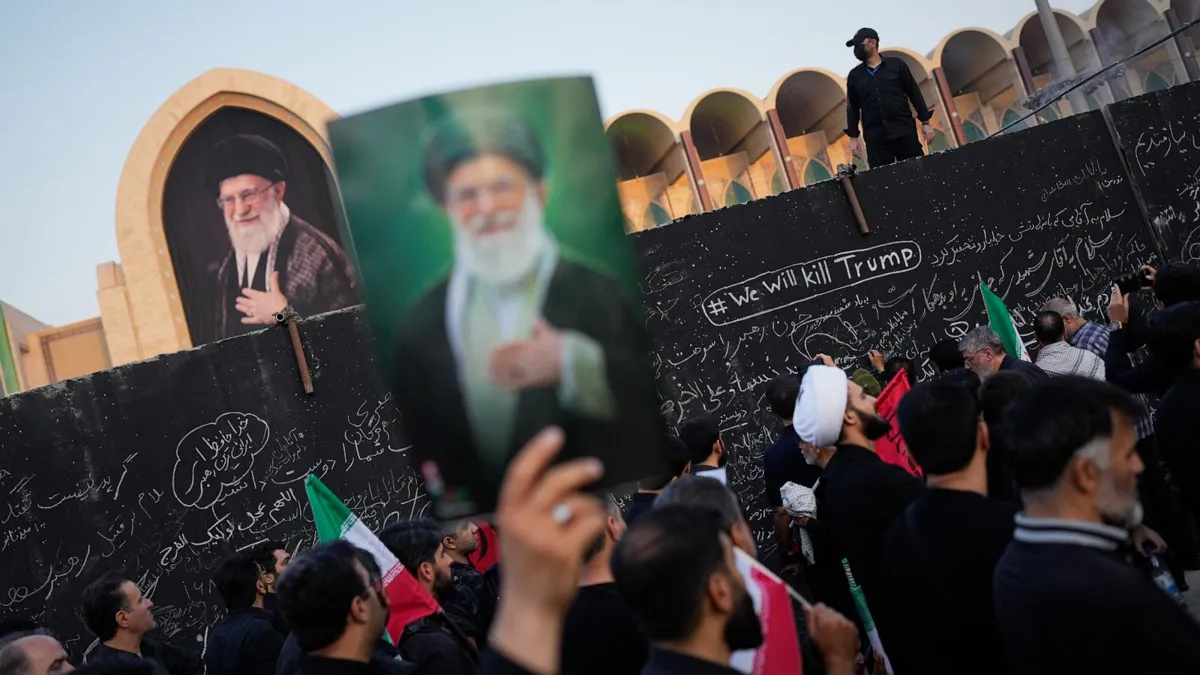
Iran Buries Khamenei as a Divided Nation Grapples With His Legacy
Iran held state funeral services for Supreme Leader Ayatollah Ali Khamenei on Thursday, laying to rest one of the most consequential — and divisive — figures in the Islamic Republic's history after more than three decades at the helm of the theocratic state.
The funeral was carefully choreographed to project national unity. Enormous crowds filled the streets of Tehran as state television broadcast footage of black-clad mourners chanting religious slogans. Government officials eulogized Khamenei as a guardian of the revolution who resisted American imperialism.
A Nation Deeply Split
Yet beneath the orchestrated mourning, Iran is bitterly divided. Tens of millions of Iranians — particularly younger generations and women who fought in the streets during the 2022 "Woman, Life, Freedom" protests — regard Khamenei as the architect of decades of repression.
His 35-year rule saw Iran's economy collapse under international sanctions, multiple waves of brutal crackdowns on protesters, and the country's progressive entry into open conflict with the United States. In recent months, Iran launched direct strikes on Israel, and the US has responded with strikes on Iranian military infrastructure.
The Question of Succession
With Khamenei gone, the question of who will lead the Islamic Republic into an uncertain future has become urgent. The Assembly of Experts — the body of clerics empowered to select a new supreme leader — is expected to convene in the coming days.
Candidates include Ali Larijani, a former parliament speaker seen as pragmatic, and Mojtaba Khamenei, the deceased leader's own son, whose candidacy would represent a dynastic transfer of power unprecedented in the Republic's history. Iran's constitution does not provide for hereditary succession, but some hardliners have pushed for Mojtaba regardless.
The Legacy
Khamenei took power in 1989 following the death of the founder of the Islamic Republic, Ayatollah Ruhollah Khomeini. Over decades he consolidated near-absolute control over Iran's military, judiciary, media, and economy. He oversaw Iran's nuclear program, which reached near weapons-grade capability, as well as its network of armed proxies across the Middle East — from Hezbollah in Lebanon to the Houthis in Yemen. Whether his successor will maintain or restructure these commitments remains the central question facing Iran and the world.