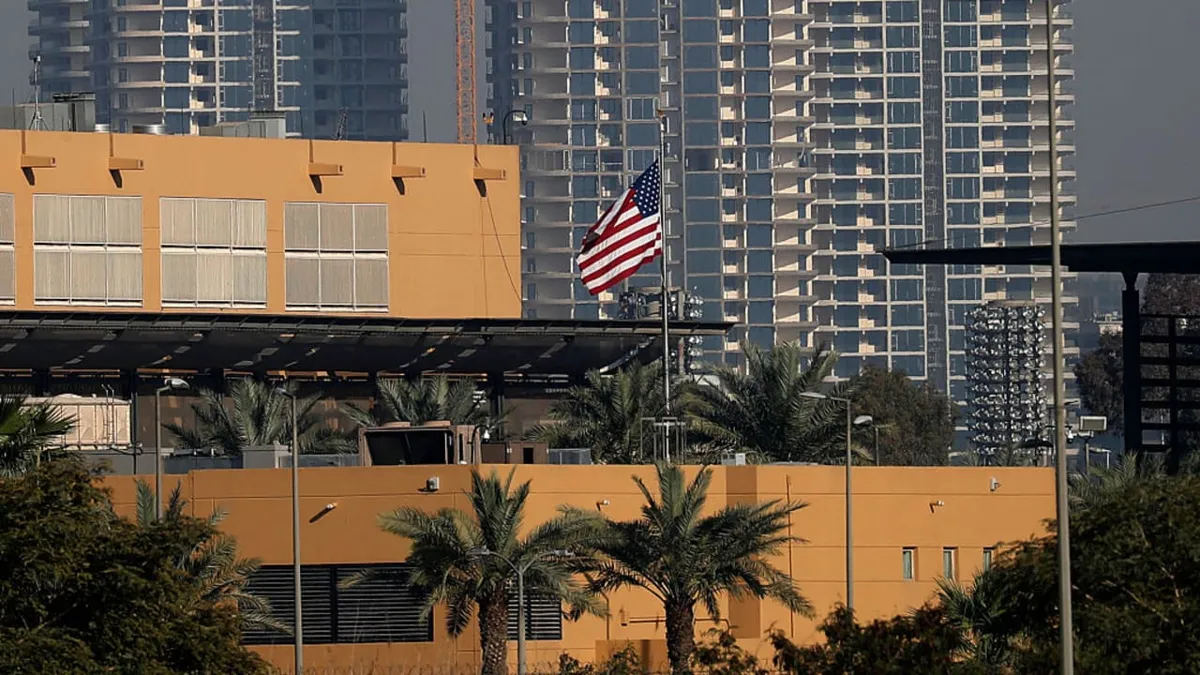
CNN: US Evacuates Diplomats and Families From Middle East Amid Escalation Fears
The United States is rushing to evacuate some diplomats and their family members from the Middle East amid the threat of an escalating conflict in the region, CNN reports, citing sources.
"Chaotic" departures and a money problem
The departures are described as a frustrating and chaotic case of "deja vu," because many of those leaving only recently returned to their posts after being recalled at the height of the war with Iran. "To say it was chaotic is putting it mildly," one US diplomat said, explaining that the financial support offered does not cover the cost of moving an entire family out of the region.
Many of these families hurriedly left their homes in the first weeks of the war and had to find new housing and schools for their children. Now many have to do it again, and, they say, the State Department's financial support may be smaller this time. A State Department spokesperson later confirmed to CNN that directly hired US staff and their families "receive per diem and allowances for housing and children's education, with per diem rates in line with government rates set for the regions of the country where they are located."
Which embassies are affected
The changes come as Iran-backed Houthi attacks on Saudi Arabia intensify — military action that the State Department has repeatedly warned "could quickly escalate beyond the immediate region." This week the department ordered non-emergency staff and all family members to leave Saudi Arabia, citing the escalation by the Houthis.
Sources told CNN the department is also quietly adjusting staffing limits at many other embassies in the Middle East, including Jordan, Bahrain, Kuwait, Qatar, the United Arab Emirates and Lebanon. A spokesperson confirmed "temporary staffing changes under limited operating status" in Lebanon, the UAE, Qatar and Jordan, and said there are no staffing changes in Kuwait and Bahrain. Unlike the Saudi order, the moves at these embassies were not announced publicly. The department stressed that these embassies, unlike Saudi Arabia's, have not changed status and remain on "limited operations."
"The atmosphere here is like in the movie Groundhog Day," said a source in Amman, commenting on the fact that some embassy staff again had to leave the Jordanian capital. Not all embassies allowed children to return to their parents' posts, but most allowed spouses. Now family members are leaving embassies where they were only recently allowed back.
Wider context
NBC reported earlier that the US began pulling troops from bases and cutting diplomatic staff in the Middle East because of threats from Iran. Trump has hinted at possible renewed strikes on Iran after the midterm elections, and sources say Israel has lobbied, so far unsuccessfully, for more immediate action. A recent US Congress study put the direct cost of Trump's decision to go to war with Iran at about $38 billion over the first five months of fighting, and the war depleted munitions stocks that may take at least five years to rebuild.
More in our world news section.