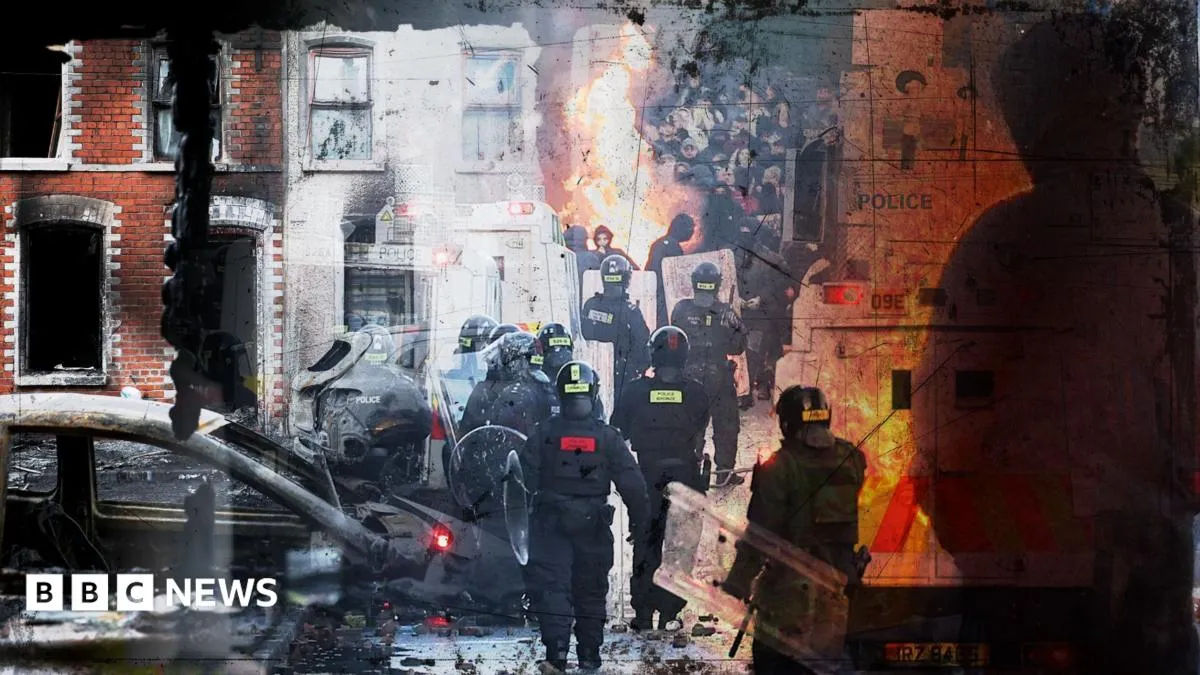
Northern Ireland's race riots: communities still living in fear three months on
On the evening of June 9, 2026, parts of Northern Ireland descended into some of the worst racial violence in the region's recent history. Buses were hijacked and set ablaze, water cannon were deployed by police, and people were targeted because of the colour of their skin. Three months later, communities affected by the violence are still coming to terms with what happened.
Living through the night of chaos
Maria, a woman of African heritage who had lived peacefully in a loyalist area of east Belfast for two years, described her panic as the riots broke out nearby. "I just panicked. I started to fill buckets of water. I even filled my [bath] tub," she said. "That was my breaking moment. I thought: 'If a fire starts, how do I get out of this?'"
Henry, who had moved to Belfast from Nigeria a year before the riots, described the sense of sudden threat: "All of a sudden you're getting a hint that you're a stranger. It's like suddenly you see lots of lions surrounding the sheep."
Aftermath: fear, trauma and uncertain futures
The riots — sparked by a knife attack — saw consecutive nights of violence, broadcast around the world. For many members of Northern Ireland's migrant and minority communities, the events shattered a fragile sense of belonging. Three months on, many remain anxious about their safety and uncertain about whether to stay.