Trump's Iran Pressure: China Resists, India Balances, UAE Retreats
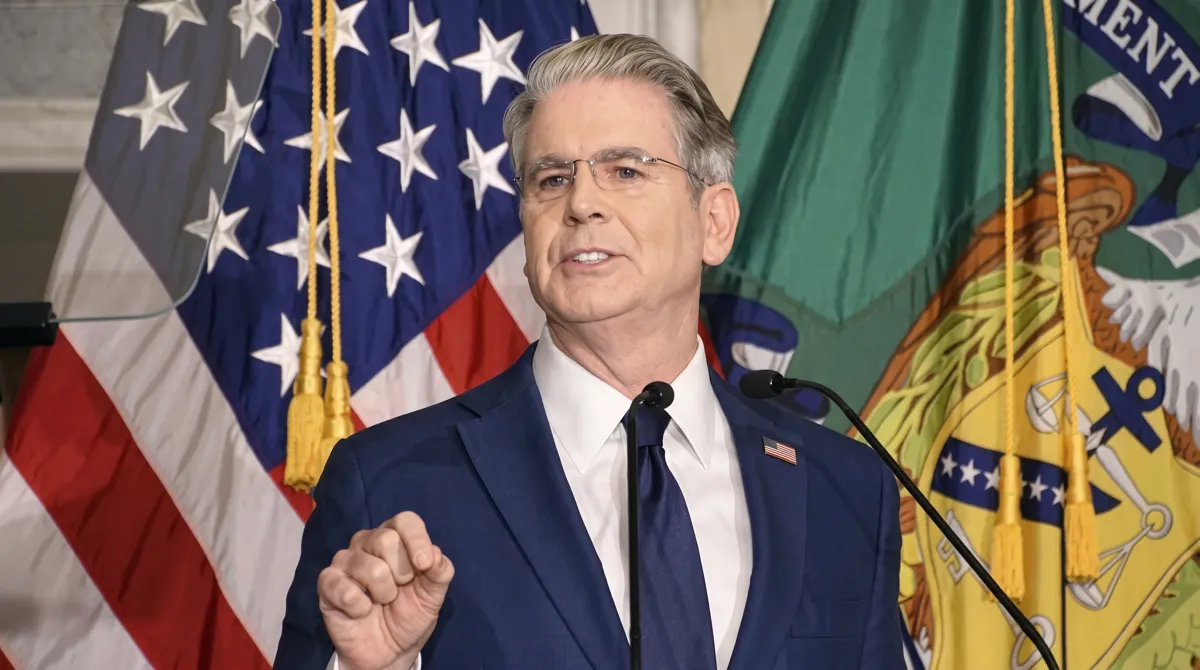
US Treasury Secretary Scott Bessent vowed to economically strangle Iran's government until it agrees to a peace deal with President Trump. Speaking ahead of the G20 finance ministers meeting in Asheville, Bessent said he was working to seize offshore bank accounts and luxury real estate belonging to Iran's Islamic Revolutionary Guard Corps (IRGC).
Operation Economic Outcast
At the end of August, the US launched Operation Economic Outcast, imposing sanctions on approximately 60 individuals, companies, and vessels. Washington is also threatening foreign firms and financial institutions with secondary sanctions if they provide economic support to Iran. In a first concrete step, the US Treasury proposed stripping UAE-based Banque Misr UAE of access to US correspondent banks, accusing it of processing around $1.8 billion in transactions for entities linked to Iran's shadow banking system between 2024 and 2026.
China: Calculated Resistance
China is Iran's largest oil buyer. In 2025, China imported an average of around 1.4 million barrels of Iranian oil per day. Recently those shipments fell sharply from 785,000 barrels per day in June and 823,000 in July to a preliminary 534,000 in August. Chinese independent refineries continue buying Iranian oil via intermediaries and alternative payment channels. Beijing rejects American sanctions as unilateral and extraterritorial measures. Sinologist Marina Rudyak of Heidelberg University notes that the current confrontation is "more of a rhetorical game" as long as Washington does not enforce its threats.
India and UAE
India is treading a careful line between its economic interests in Iranian oil and pressure from Washington. The UAE, facing the most direct threat via the proposed action against Banque Misr UAE, is stepping back more decisively and distancing itself from Iran under this dual pressure.