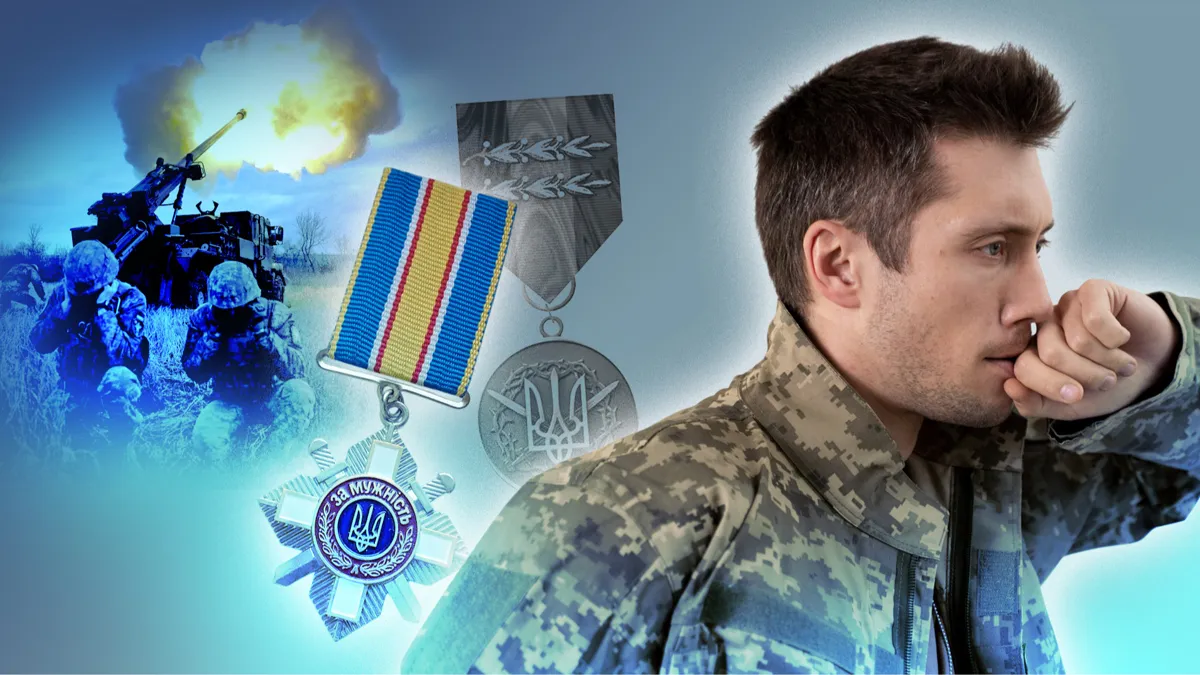
Why Ukrainian Soldiers Are Losing Trust in State Awards
Ukraine's awards system has survived unprecedented workload, a huge volume of paperwork and constant staff shortages, but it increasingly leaves soldiers with a sense of injustice, an Ukrainska Pravda investigation found.
The story begins with Junior Lieutenant Vladyslav Polsky, call sign "Teacher". Three days earlier, the joint forces group published drone video of two wounded Ukrainian soldiers beside a destroyed ground robot in the open, an ideal target for Russian drones. A civilian pickup raced towards them; the driver, without body armour or helmet, loaded the soldiers into the truck bed and drove back. He was Polsky, a company commander, who received the title Hero of Ukraine. President Zelensky called it an "outstanding story" in his 19 August evening address. Almost every interviewee mentioned the award, some as proof of a deed that leaves no doubt, others asking why people who did similar things earlier got no recognition, others as evidence of how much media attention affects the chance of being decorated.
"I saw servicemen who did not want to receive awards because they have been devalued. Devalued by being given to people who did not deserve them, and it shows," said a deputy battalion commander in charge of awards in his unit. "There is great disbelief in the system. And how to fix it, I do not know now."
Myths about the Hero title
Six of every seven appeals on the president's petition site ask him to grant the Hero of Ukraine title, always posthumously, on the grounds that a soldier gave the most precious thing for his country. Yet the chance of success through a petition is very low. Critics see inequality in this, since recognition should not depend on whether a family can gather 25,000 signatures.
Another myth is that civilians decide on top awards. The State Awards and Heraldry Commission has eleven members, eight of them scholars and three retired military officers. Since June 2023 an expert group of servicemen, law-enforcement officers, intelligence and rescue personnel has considered Hero nominations. The commission itself has held no in-person meetings since the coronavirus epidemic. Member Mykola Chmyr hopes for a new impulse now that Kyrylo Budanov heads it. The criteria for Hero are only "a prominent heroic deed or outstanding labour achievements", which leaves room for interpretation. Open data show that among living recipients officers outnumber privates and sergeants, while among posthumous recipients the reverse is true.
"The battalion commander's friends"
Soldiers describe favouritism. "Battalion and brigade commanders are often put forward for awards because they are all friends. Our battalion commander, for example, is the godfather of the brigade commander," said Artem, a unit psychological support officer. Submissions credit events actually carried out by soldiers to "competent leadership". He recalled being told to nominate a newly arrived friend of the former brigade commander for the Order of Bohdan Khmelnytsky, and reading a submission that cited the defence of a settlement Russia had captured three months earlier. The opposite also happens: commanders may not nominate someone who fell out of favour. Lawyer-analyst Dmytro Petryshyn of the human-rights centre "Principle" uses the phrase "the battalion commander's friends". See more in Politics.