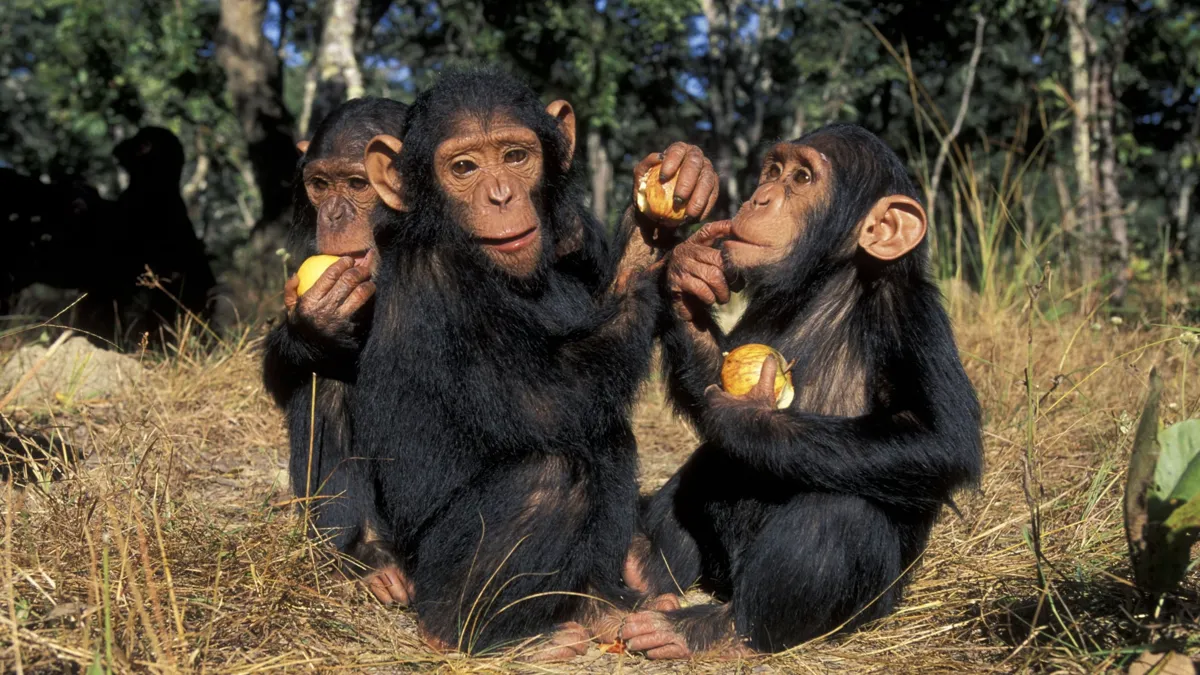
Ancient Virus Switched Off a Brain Gene in Chimpanzees, Study Finds
A virus that infected chimpanzees about 4 million years ago left behind a piece of DNA that switches off a gene active in the developing human brain, researchers at Lund University in Sweden report in Science Advances. The finding points to one concrete way a viral infection may have nudged chimpanzee and human brains onto different developmental paths.
Humans and chimpanzees diverged from a common ancestor around 5 to 6 million years ago, and only about 1.2 percent of our DNA differs. Yet human brains are roughly three times larger, and scientists have long asked how so similar a set of protein-making genes produces such different brains.
A virus found in apes but not in humans
"We knew that ancient viruses can leave DNA behind in the genome, and those remnants can affect nearby genes," said lead author Patricia Gerdes, a molecular neurogeneticist at Lund University. The team focused on PTERV1, short for Pan troglodytes endogenous retrovirus-1. This retrovirus is found in chimpanzees and other African apes, but not in humans.
It is unclear why humans never carried PTERV1 when so many related apes did. One theory is that an antiviral protein called TRIM5α protected our ancestors. Another is that the ancestors of chimpanzees and humans lived in different places when the infection spread. The new study does not try to settle that question.
The gene that went quiet
The virus inserted DNA sequences into the chimpanzee genome that remain active today. One of them sits at LINC00662, a stretch of DNA that is copied into a molecule that provides instructions for building a particular protein. Both species have it. The researchers found that in humans it is active during early brain development, and their experiments suggest it helps brain cells mature and grow extensions.
In chimpanzees, the viral insertion switches LINC00662 off.
What the organoid experiments showed
To test what the gene does, the team used human brain organoids, tiny clusters of cells grown in the laboratory as a model of the developing brain. When LINC00662 was switched off, neurons and their extensions, the dendrites and axons that carry signals between cells, did not mature and grow as prolifically as with the gene intact.
The researchers also worked in the other direction. In chimpanzee stem cells, removing the viral insertion restored LINC00662 activity, showing that the insertion contributes to silencing the gene.
What the result does not show
Gerdes was careful about the limits. "We do not yet know all of LINC00662's roles in the human body, or what the loss of its activity means for chimpanzees as a whole," she said. Had humans carried the same insertion, the gene would probably have been switched off and brain-cell development altered, she explained, "but we cannot predict that this would produce a particular brain shape, ability, or behavior," because the effect could depend on surrounding DNA and other genes.
Restoring the gene in chimpanzee cells likewise does not show that brain development would be transformed. "Brain differences arise from many genetic and developmental influences," Gerdes said, and removing the insertion from an adult brain would not undo the brain's earlier development.
The study adds to evidence that retroviral insertions contributed to differences between humans and chimpanzees. For more research coverage, see our science section.