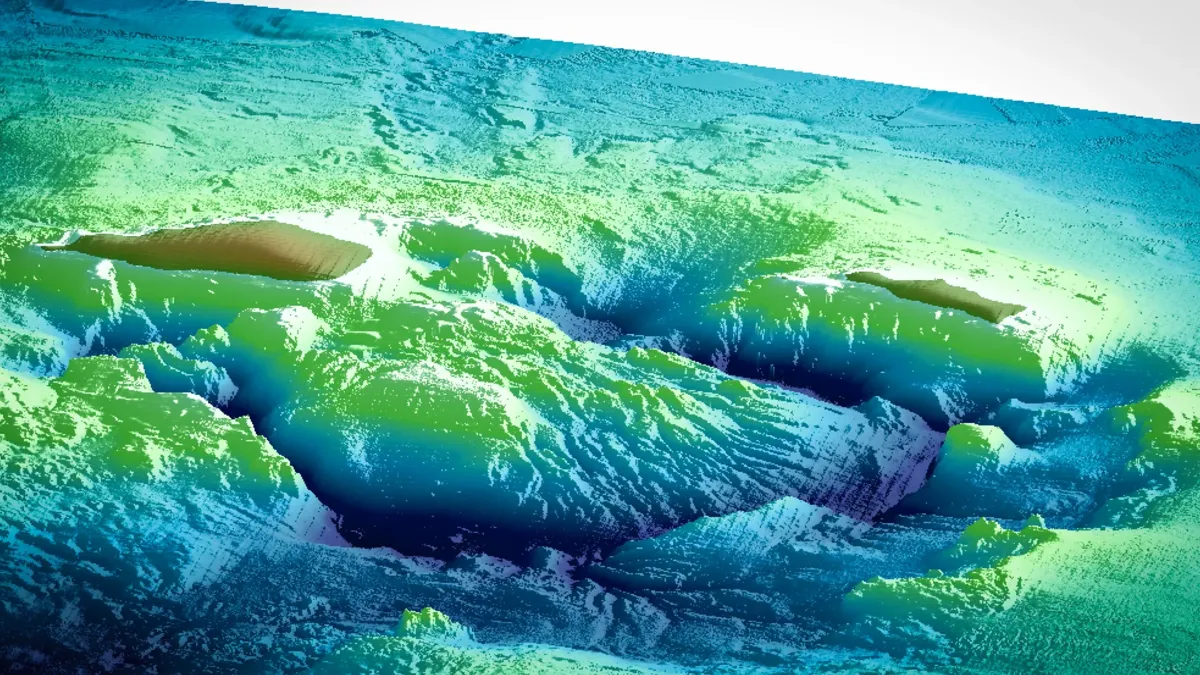
Japan's Kikai Supervolcano Is Refilling Its Magma Reservoir, Study Finds
One of Earth's most powerful supervolcanoes is slowly refilling its underground magma reservoir thousands of years after a giant eruption, according to Kobe University researchers. Seismic surveys beneath Japan's Kikai caldera, which erupted about 7,300 years ago, found evidence that fresh magma is accumulating there. The study appears in Communications Earth & Environment.
Why Kikai is a useful laboratory
Some eruptions release so much magma that the rock above the emptied reservoir collapses, leaving a broad, shallow depression called a caldera. Yellowstone in the United States, Toba in Indonesia and Kikai are examples. Kikai's last giant eruption, about 7,300 years ago, was the largest known volcanic eruption of the Holocene, the epoch that began roughly 11,700 years ago. The magma released would have been enough to bury New York City's Central Park under a layer about 12 kilometres (7.5 miles) thick.
Scientists know that giant caldera volcanoes can erupt more than once, but they understand little about how such large volumes of magma accumulate, which makes future eruptions hard to anticipate. "We must understand how such large quantities of magma can accumulate to understand how giant caldera eruptions occur," says Kobe University geophysicist Nobukazu Seama. Most of Kikai lies beneath the sea, which turns out to be an advantage: "The underwater location allows us to implement systematic, large-scale surveys," Seama explains.
Listening to the crust
With the Japan Agency for Marine-Earth Science and Technology (JAMSTEC), the team used airgun arrays to send seismic pulses through the crust below the seafloor. Instruments called ocean bottom seismometers recorded how the waves traveled. Seismic waves move differently through solid rock than through regions containing molten material, so the recordings reveal structures that cannot be observed directly.
The analysis revealed a substantial region with a high proportion of magma directly beneath the site of the 7,300-year-old eruption. Its position and extent indicate that it is the same magma storage system involved in that eruption. "Due to its extent and location it is clear that this is in fact the same magma reservoir as in the previous eruption," Seama says.
New magma, not leftovers
Earlier work found that a lava dome has been growing near the center of the caldera for about the past 3,900 years, and chemical analyses showed that material from the dome and other recent activity differs in composition from what the giant eruption released. That suggests the magma now stored beneath the dome came from new injections of molten rock from deeper in the crust or mantle rather than being left over from the eruption. "This means that the magma that is now present in the magma reservoir under the lava dome is likely newly injected magma," Seama summarizes.
Implications for other supervolcanoes
The researchers say this re-injection model is consistent with the large, shallow magma reservoirs that exist beneath other giant calderas such as Yellowstone and Toba. The recharge does not mean another catastrophic eruption is imminent; it shows how a reservoir can be rebuilt over thousands of years, which scientists need to understand before they can assess the long-term behavior of supervolcanoes.
The team now wants to refine its seismic methods to study the movement and storage of magma in more detail. "Our ultimate goal is to become better able to monitor the crucial indicators of future giant eruptions," Seama says. The work was supported by Japan's education ministry (MEXT) and the Japan Society for the Promotion of Science.
More Earth-science news is in our science section.