Climate Change Drives European Wildfires to Record Levels in 2026
Europe's 2026 wildfire season is breaking records: twice as much land has already burned compared to the annual average of 2006–2025, and total damage was already estimated at €15 billion as of early August. A new study by the Potsdam Institute for Climate Impact Research (PIK), published in Global Change Biology, projects that burned areas could triple if global temperatures rise by approximately 3.6°C above pre-industrial levels.
What the science says
Lead author Maik Billing warns that even with significant climate action, Europe could see around 39 percent more land burned by century's end. The risk is highest in the Mediterranean and in large parts of western and central Europe — including regions with little prior fire history. Without swift emissions cuts, conditions could reach the limits of what is manageable, according to co-author Kirsten Thonicke of PIK.
Germany's worst wildfire on record
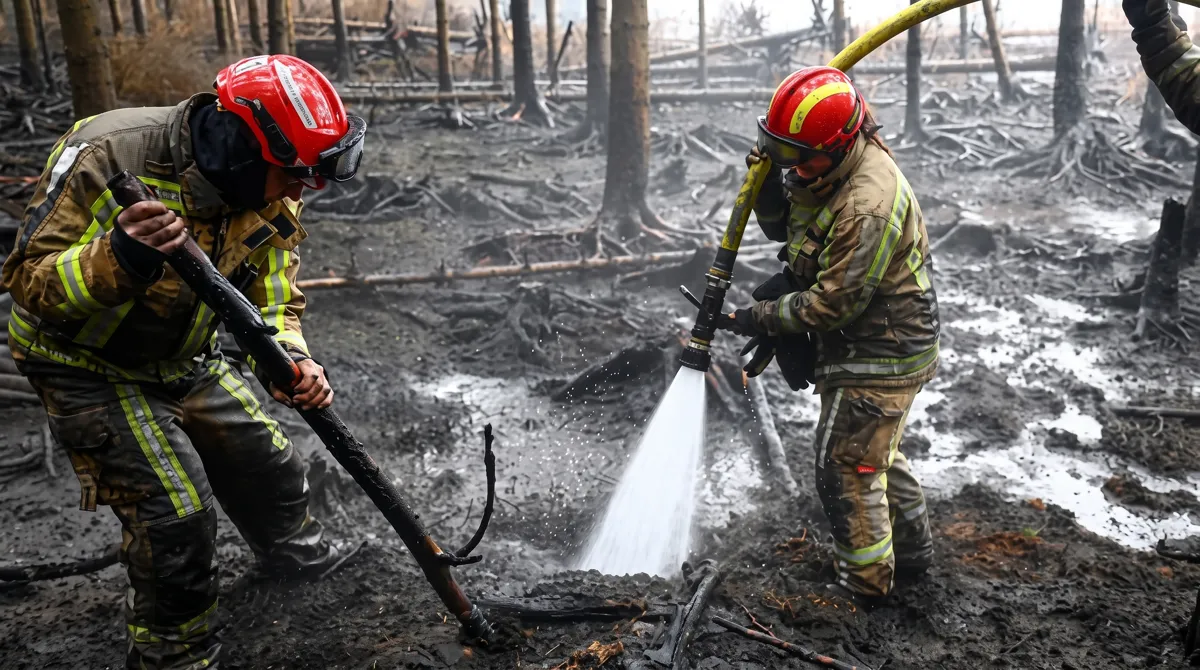
North Rhine-Westphalia is experiencing what experts call likely its largest wildfire in recorded history. The Hürtgenwald fire has destroyed or damaged 300–400 hectares — an area equivalent to at least 420 football pitches. About 1,500 firefighters have been battling the blaze in 12-hour shifts for nearly a week, with efforts complicated by unexploded World War II munitions detonating in the heat.
Prevention pays off
The EU is channeling €2.1 billion into forest and fire management across member states between 2021 and 2027. Thomas Hickler of Senckenberg Society for Nature Research, a co-author of the study, stressed that investment in fire prevention can make a significant difference. The World Bank calculates that every euro spent on prevention saves up to seven euros in firefighting and reconstruction costs. With rapid emissions reductions combined with effective fire management, burned areas could actually be reduced by up to 90 percent, the researchers found.