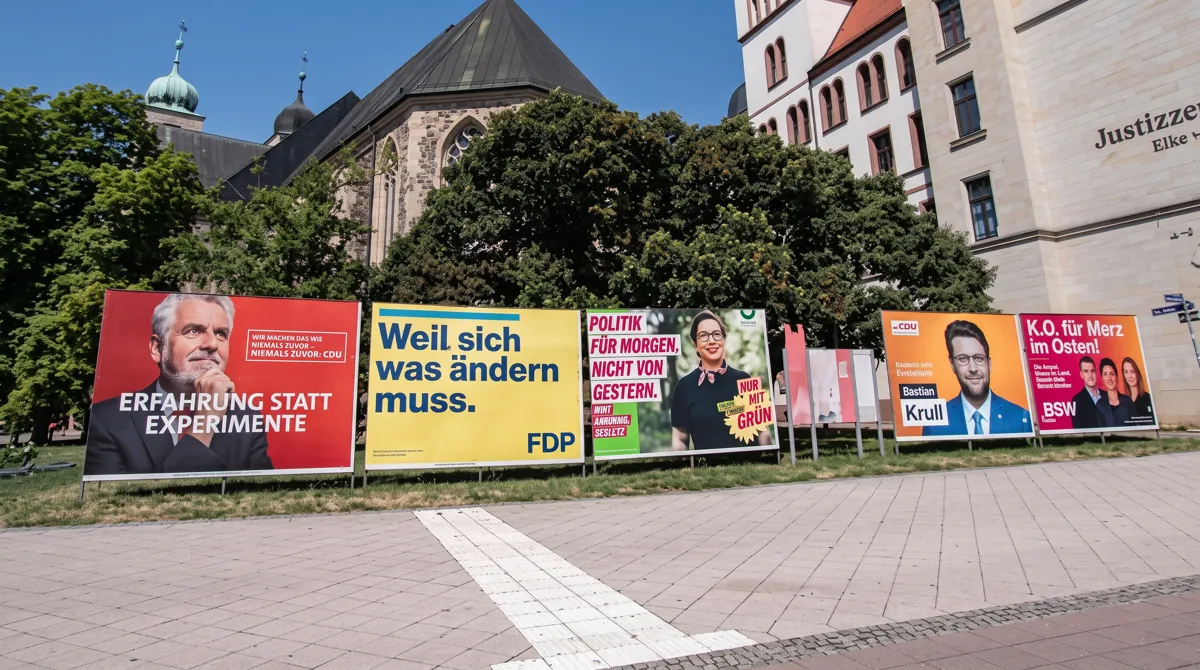
German Parties Struggle to Win Voters with Migrant Backgrounds
German mainstream parties face a growing challenge ahead of upcoming state elections in Saxony-Anhalt, Mecklenburg-Vorpommern, and Berlin: they are steadily losing support among voters with a migration background, according to a new study from the German Centre for Integration and Migration Research (DeZIM).
A Growing and Decisive Electorate
In 2023, twelve percent of eligible voters in Germany had a migration history — more than seven million people — and that share is growing. The DeZIM study found that voters with migration backgrounds are distancing themselves from established parties even more than other voters.
Despite the overall trend, the Social Democrats (SPD) retain the largest potential among this group: two out of three voters with migrant backgrounds consider the SPD a viable choice. The CDU and CSU follow closely in second place. Crucially, only one in five respondents categorically ruled out voting for either the SPD or the CDU/CSU.
Younger Generations Drifting Away from SPD
Study co-author Friederike Roemer noted a generational shift: while older voters with migration backgrounds lean toward the SPD, younger generations are increasingly alienated. “New is the intensified estrangement of voters of Turkish origin from the parties,” Roemer stated.
AfD Targets Migrant Communities Strategically
The far-right Alternative for Germany (AfD) faces the strongest rejection from voters with migrant backgrounds — nearly two-thirds categorically refuse to vote for the party, especially those with roots in Turkey, the Middle East, and North Africa. Yet the AfD has recognized the electoral potential of this demographic. Martin Gerlach, managing director of the Turkish Community in Germany (TGD), noted that the AfD was the first party to communicate in native languages with effective imagery, citing the 2021 federal election campaign in Berlin-Neukoelln, where the slogan read: “Ataturk would vote AfD.” Other parties, he argued, simply do not make the effort to think about these voter groups.