Polarized Light Could Detect Hypothetical 'Mirror Life' Before It Exists
Researchers at the University of Strathclyde and Durham University have proposed what they describe as the first way to detect "mirror life", a hypothetical form of life built from reversed versions of the molecules found in living organisms on Earth. The proposal is published in Royal Society Open Science.
Why mirror life is a concern
Mirror life does not exist today. Some experts nonetheless consider its creation a serious biosafety concern: such organisms could behave unpredictably in Earth's ecosystems and might evade natural defences that protect people, animals and plants. The likelihood is considered low, but the consequences could be severe, and scientists have recommended restrictions on research aimed at producing organisms that reproduce with mirror-image biomolecules. The topic has drawn attention from the UK Government Office for Science and the United Nations Secretary-General's Scientific Advisory Board.
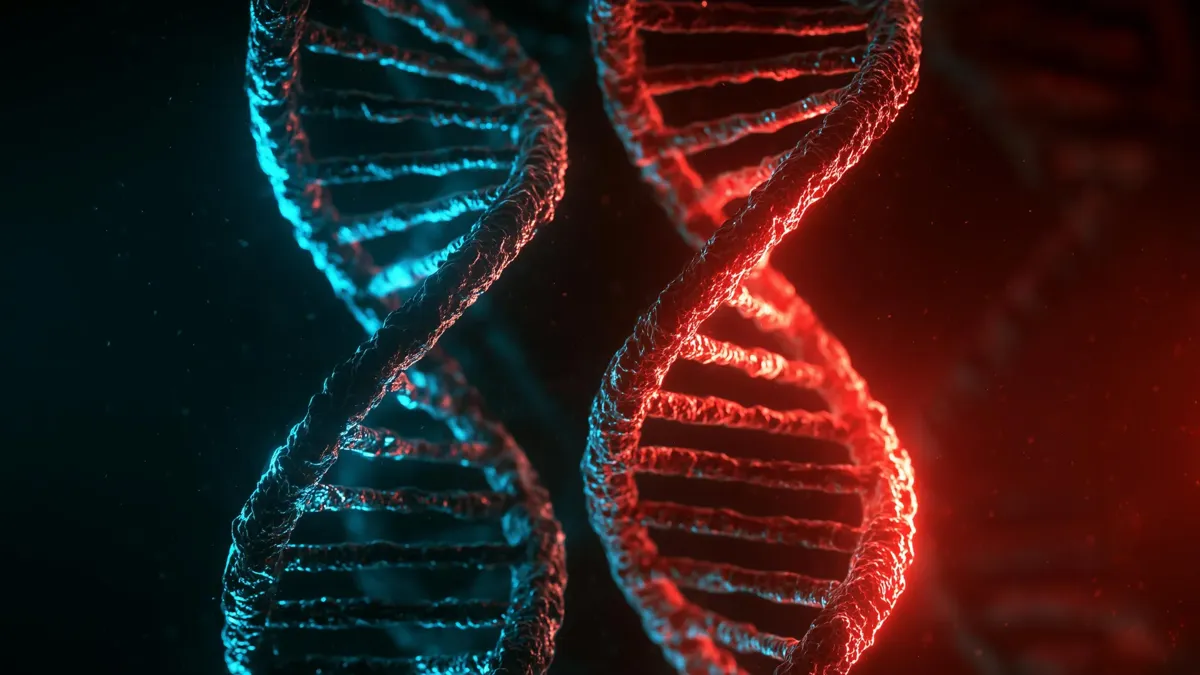
The science rests on chirality, or molecular "handedness". Like left and right hands, some molecules exist in two forms with the same atoms connected in the same order but with different three-dimensional arrangements. The body can respond very differently to the two forms; one version of a drug may work while its mirror image is ineffective or harmful.
Using light as a fingerprint
The method relies on circularly polarized luminescence (CPL), light emission whose polarization rotates in a direction that reveals the handedness of a substance. The same fundamental concept lets modern 3D cinema glasses create a stereoscopic image. The team suggests special fluorescent probes that attach to particular structures inside cells; once bound, they would give characteristic CPL signals showing whether a sample carries the handedness of ordinary life or its reverse.
A single probe could mislead, so the researchers propose combining several probes aimed at different cellular structures to make the readout more dependable.
What has and has not been shown
The technique can be refined using ordinary biological samples, so no mirror organisms need to be made. Professor Robert Pal of Durham has already demonstrated laboratory-scale CPL detection with microscopes, cameras and cell plate readers. However, the complete detection method designed for mirror life has not yet been demonstrated experimentally, and more research is needed to show it can reliably distinguish different handedness in biological samples.
Dr. Lewis MacKenzie of Strathclyde, who led the work, said: "We don't expect mirror life to appear tomorrow, but if it did arise, the consequences could be severe, and it makes sense to develop detection methods before they are needed."
More research news is in our Science section.