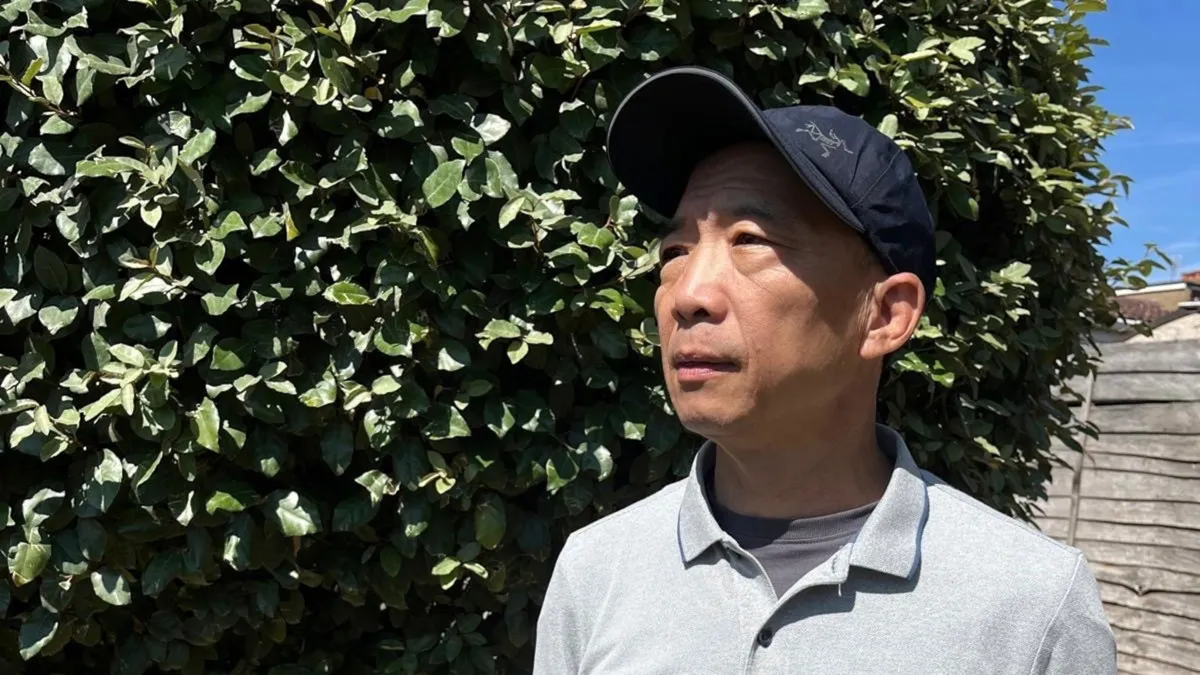
Hong Kong Democracy Activist Faces UK Deportation After Tearful Family Reunion
Wu Chi-wai, once the chairman of Hong Kong's Democratic Party — the city's largest opposition party — stood in a London airport last week and held his wife and young son, whom he had not seen in years. Both of them wept with joy. But the reunion came with a painful countdown: British border authorities granted him only seven days of immigration bail, meaning he must leave the United Kingdom by Wednesday, July 29.
Years in Prison Under Hong Kong's National Security Law
Wu was one of 47 pro-democracy activists prosecuted in what became the largest trial under Hong Kong's National Security Law, imposed by Beijing in 2020 following the massive pro-democracy protests of 2019. He was charged in 2021 and sentenced in 2024 to four years and five months in prison for conspiracy to commit subversion.
During his imprisonment, both of Wu's parents died. He was allowed to briefly attend their funerals, a rare concession — but could not grieve alongside his family abroad. His wife and son had relocated to the United Kingdom in 2022, joining hundreds of thousands of Hong Kongers who left the city under the UK's special BN(O) visa scheme introduced for those fleeing the crackdown.
A Seven-Day Window
After his release from prison last month, Wu flew immediately to London to see his family. But British immigration authorities placed him on a seven-day bail upon arrival, leaving him only days to spend with his wife and son before he faces mandatory departure.
He told reporters he was very worried about whether he would have the ability or a chance to secure re-entrance to the United Kingdom to meet with his family again. The uncertainty is acute: without formal residency or refugee status in the UK, there is no clear path for him to return after leaving.
A Dismantled Political Party, Imprisoned Colleagues
The Democratic Party, which Wu once chaired, has since been dissolved. Many of its members, like Wu, were swept up in the NSL prosecutions or fled abroad. Jimmy Lai, the media mogul and prominent democracy advocate who became one of the most recognizable faces of Hong Kong's resistance, remains imprisoned, serving a 20-year sentence.
The 47-defendant case in which Wu was convicted stands as a defining moment in Hong Kong's political transformation since the handover. The crackdown effectively dismantled the city's organized political opposition, leaving the legislature populated almost entirely by Beijing-aligned figures.
UK Support — and Its Limits
The UK Home Office said it does not routinely comment on individual cases but reaffirmed that it remains steadfast in supporting Hong Kongers. Since 2021, more than 230,000 Hong Kongers have arrived in Britain on special BN(O) visas, and approximately 9,800 have been granted permanent settlement.
But Wu's case illustrates the gap between broad political support and the practical limits of immigration law. Despite the UK's stated solidarity with democracy advocates from Hong Kong, the specific legal mechanisms for admitting someone in Wu's circumstances — a former prisoner with no current residence in Britain — remain unclear.
Wu said he does not intend to engage in politics after his release. He just wants to start afresh and cherish the time he has to reunite with his family. Whether he will be able to do so in the UK, even temporarily, now rests on a legal and diplomatic process with no guaranteed outcome.