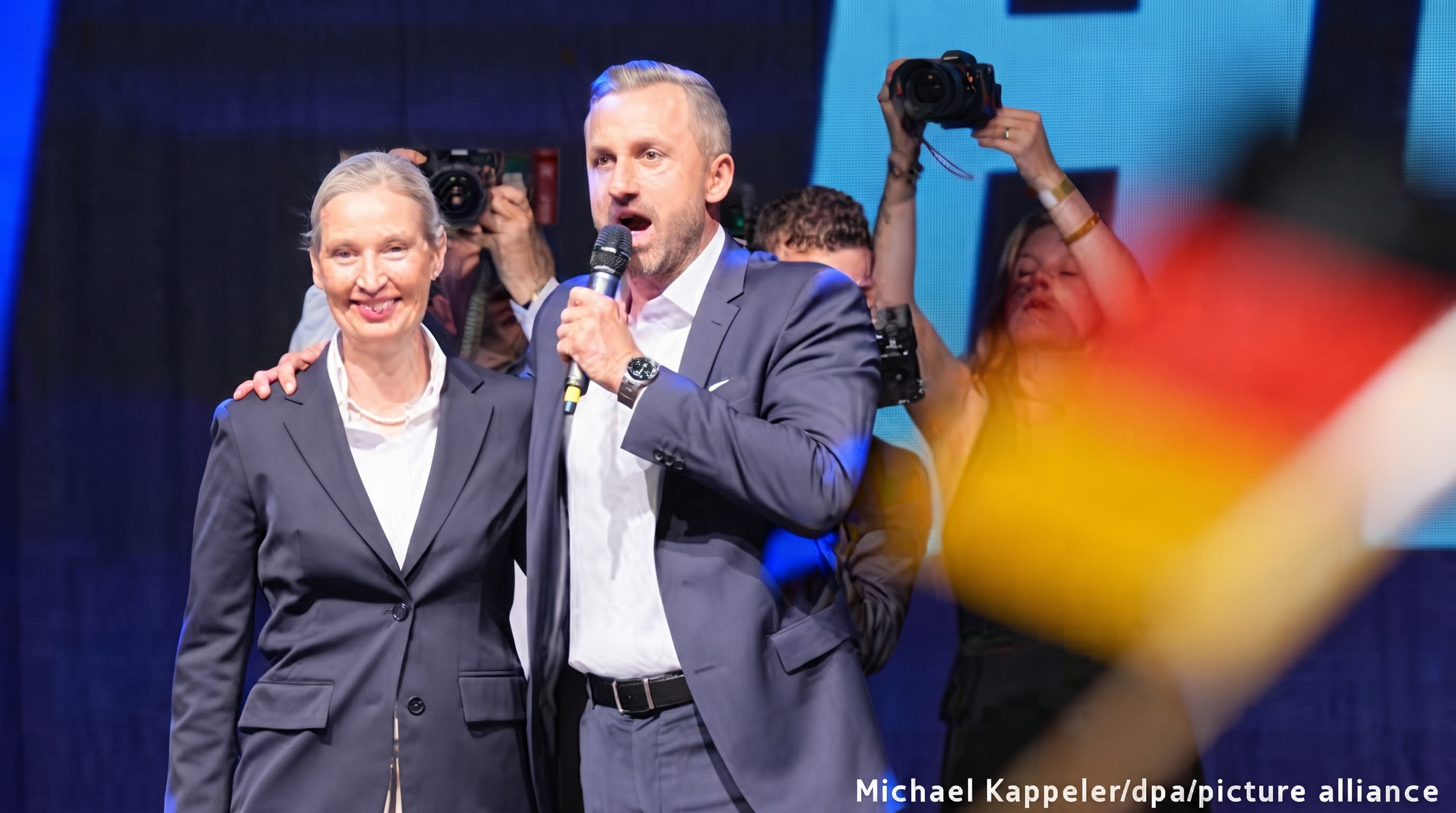
AfD Eyes Saxony-Anhalt Govt After Record 44% Win — No Coalition in Sight
Germany’s far-right Alternative for Germany (AfD) won the Saxony-Anhalt state election with approximately 44 percent of the vote — a record result for the party that left all other parties far behind. Despite the commanding lead, AfD fell short of the absolute majority needed to govern alone, and the question of who might partner with it remains unanswered.
Siegmund Pledges Outreach, Sees No Partners
AfD’s top candidate and election winner Ulrich Siegmund, 35, announced on election night that he would “extend a hand to all forces willing to bring about a fundamental political turnaround.” At the same time, he acknowledged he currently sees no parties willing to join a government with AfD. Party chair Alice Weidel, speaking on ZDF television, sharply attacked the CDU’s strategy of maintaining a “firewall” against AfD: “CDU will not win another election,” she declared.
CDU Rules Out Coalition, BSW Is the Wild Card
CDU General Secretary Franziska Hoppermann made her party’s position unambiguous: “There will be no cooperation with left-wing or right-wing extremists.” The biggest wildcard in the post-election power struggle is the small Bündnis Sahra Wagenknecht (BSW) party, which advocates left-leaning economic policies and a more Russia-friendly foreign policy — though AfD does not regard BSW as an especially attractive partner on ideological grounds.
Radical Programme on the Table
AfD’s programme calls for radical restrictions on asylum and immigration: mass deportations of undocumented migrants, a mandatory work requirement for all other asylum seekers, and policies designed to make the state unattractive to immigrants. The party also plans broader social changes — defunding public broadcasting, cutting grants to pro-democracy organisations, and forming a type of citizen patrol against migrants.
Siegmund stressed that implementing the AfD programme matters more to him than securing power at any cost: “There will be no bending from me,” he said.

We use cookies to improve your experience. Privacy Policy